





The Xên Mường And Xên Bản Festival – A Unique Cultural Belief Of The Thai People In Sơn La.
The Xên mường and Xên bản festival is one of the most important traditional festivals of the Thai ethnic group in Sơn La. It is not only a ritual to express gratitude to the deities who have blessed the village but also a cultural community festival where people come together to preserve traditional values, strengthen solidarity, and wish for a peaceful and prosperous new year.
Over many generations, the Xên mường and Xên bản festival has been preserved as an indispensable part of the spiritual life of the Thai people and has become a unique cultural beauty of the Northwest region.
The origin of the Xên mường and Xên bản festival
For the Thai ethnic group, the Sky God (Pu Then) is the supreme deity who has the power to govern the heavens and determine the prosperity of the village. In addition, there are also earth gods, mountain gods, river gods, and the first people who opened up the land known as Pú mường and Pú bản.
Therefore, at the beginning of each spring, the Thai people organize the Xên mường and Xên bản festival to express their gratitude to Pu Then, the deities, and ancestors who have protected them, bringing peace, abundant harvests, healthy descendants, and village development.
This is also an occasion for the entire community to turn towards their roots, reminding descendants to preserve traditions and promote the spirit of national unity.
The significance of the Xên mường and Xên bản festival
The festival carries deep cultural, spiritual, and humanitarian values.
For the Thai people, this is a ritual to pray for favorable weather, flourishing crops, thriving livestock, abundant harvests, and a prosperous life.
Moreover, the Xên mường and Xên bản festival also reflects the principle of "drinking water, remembering its source," showing gratitude to those who have contributed to the development of the village and the protective deities of the land.
This is also an opportunity for clans, families, and villagers to meet, interact, strengthen solidarity, and contribute to building a sustainable cultural community life.
Time and location of the festival
The Xên mường and Xên bản festival is usually held at the beginning of spring after the Lunar New Year.
The ritual takes place at the village or mường temple. According to traditional beliefs, an ancient mường was very large, equivalent to a district or several communes today, so the festival always sees the participation of a large number of local people.
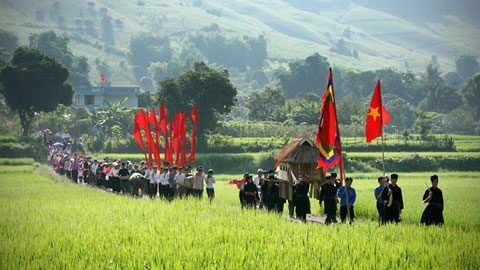
Before the festival day, the entire village will clean up, renovate the temple, tidy up the village paths, and prepare offerings for worship.
Preparation for the festival
The organization of the festival is a collective effort from the community.
The head of the clan that first opened the village will preside over the preparations and invite the shaman to perform the rituals.
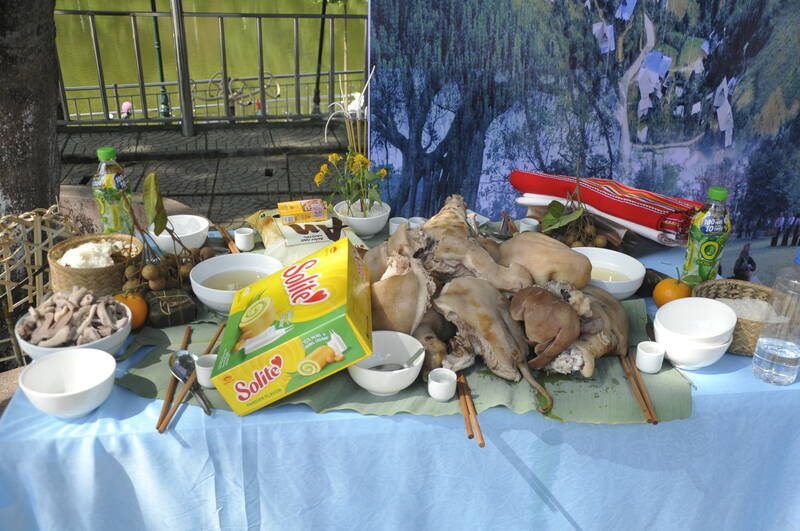
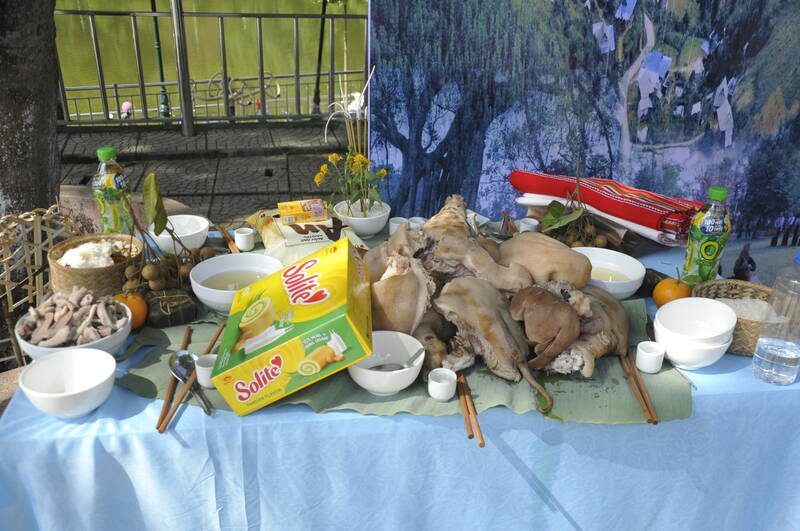
The offerings contributed by the villagers include:
- Buffalo
- Black pig
- Boiled chicken
- Chicken eggs
- Rice
- Incense
- Candles
- Traditional rice wine and many other offerings
All of these reflect the villagers' sincere respect for the deities and ancestors.
The sacred rituals in the Xên mường and Xên bản festival
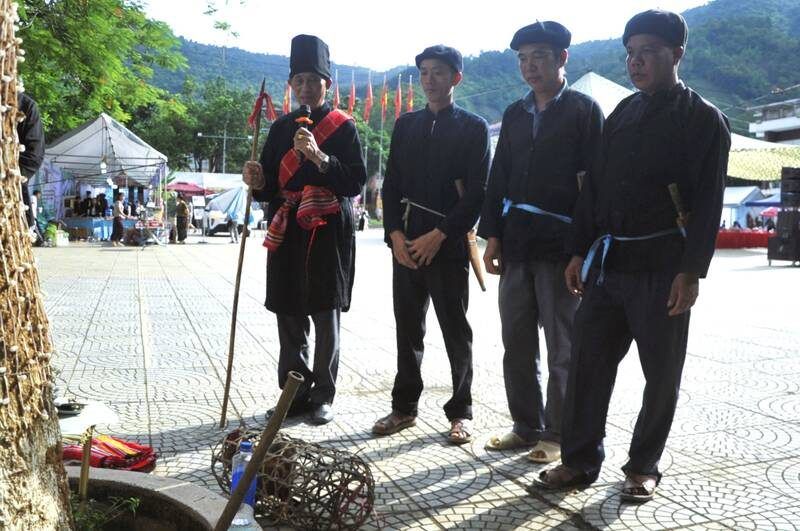
On the festival day, the shaman wears traditional clothing of the Thai ethnic group and performs the rituals at the temple.
The shaman respectfully invites Pu Then, Pú mường, Pú bản, and the deities to witness and receive the offerings that the villagers sincerely present.
On the altar, many items symbolizing the labor and production life of the Thai people are placed, such as:
- A basket of rice symbolizing abundance.
- A fishing net representing a rich source of food.
- A hammer symbolizing labor and development.
In the prayers, the shaman asks the deities to grant the village favorable weather, flourishing crops, drive away evil spirits, and bring health, peace, and happiness to every family.
At the end of the ritual, the shaman uses a split bamboo stick and tosses it to seek an omen. If the two pieces of bamboo fall in the "one up, one down" position (called xiếng), it signifies that the prayer has been accepted by Pu Then and that the new year will bring much luck.
The entire ritual usually lasts about 30 minutes.
The ritual of receiving blessings and rice wine
After completing the offerings, the offerings are lowered for the villagers to share the blessings.
The head of the clan will open the jar of rice wine and invite the shaman to take the first sip as a gesture of gratitude to the deities. After that, everyone gathers around the rice wine jar, enjoying traditional dishes, wishing each other health, abundant harvests, and a prosperous life.
This warm atmosphere is a characteristic beauty of the community culture of the Thai people.
The lively festival filled with cultural colors
After the ritual, the joyful atmosphere of the festival is filled with a series of cultural activities, artistic performances, and traditional folk games.
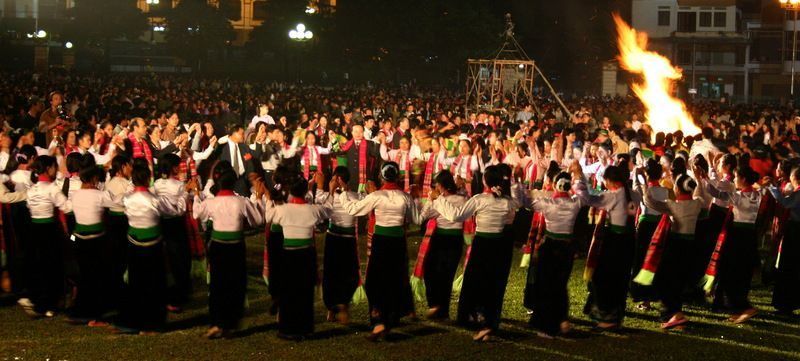
The sound of gongs marks the beginning of special dances such as:
- Xòe dance
- Scarf dance
- Khua luống (pestle dance)
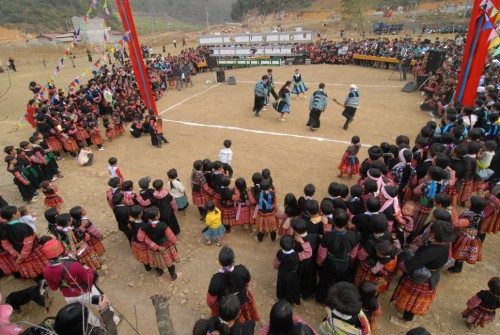
In addition, there are many exciting folk games:
- Throwing con
- Spinning top
- Tó má lẹ
- Response contest
- Tug of war
- Push stick
- Crossbow shooting contest
According to the belief of the Thai people, the wider the xòe circle, the farther the sound of gongs travels, and the more con balls that hit the circle, the more luck the village will have that year, leading to a peaceful and prosperous life.
The cultural value of the Xên mường and Xên bản festival
Not merely a spiritual ritual, the Xên mường and Xên bản festival is also a symbol of the cultural community life of the Thai ethnic group.
The festival helps preserve many traditional cultural values such as language, costumes, music, xòe dance, folk games, and traditional rituals passed down through generations.
At the same time, it is also an opportunity to educate the younger generation about the tradition of "drinking water, remembering its source," raising awareness of preserving ethnic cultural identity and enhancing the connection between clans and villages.
The Xên mường and Xên bản festival in Sơn La
The Thai people are the largest ethnic group in Sơn La, so the Xên mường and Xên bản festival is held in many localities such as:
- Mộc Châu
- Thuận Châu
- Sơn La City
- Sốp Cộp
- Bắc Yên
Each locality has its own unique characteristics in the rituals and organization, but they all maintain the core meaning of honoring the deities, praying for peace, and uniting the community.
Reconstructing the Xên Bản festival in Thuận Châu in 2026
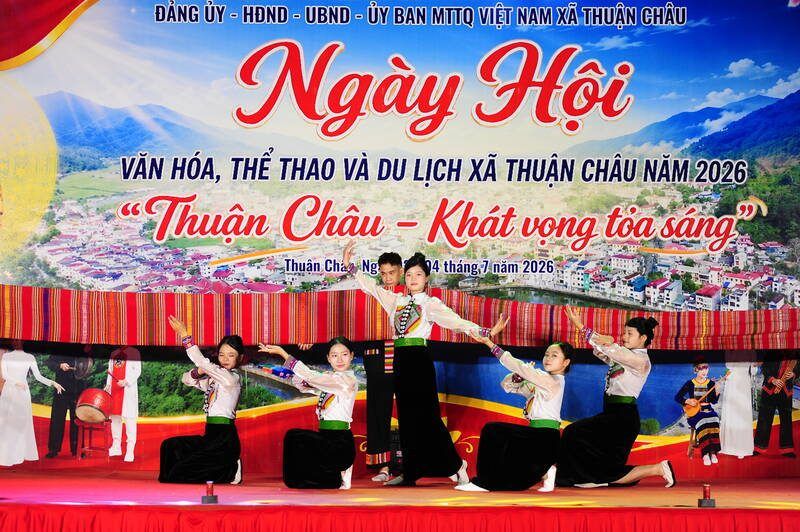
On the morning of July 3, 2026, as part of the Culture, Sports, and Tourism Festival in Thuận Châu, the locality organized a reconstruction of the Xên Bản festival to recreate one of the typical traditional rituals of the Thai ethnic group.
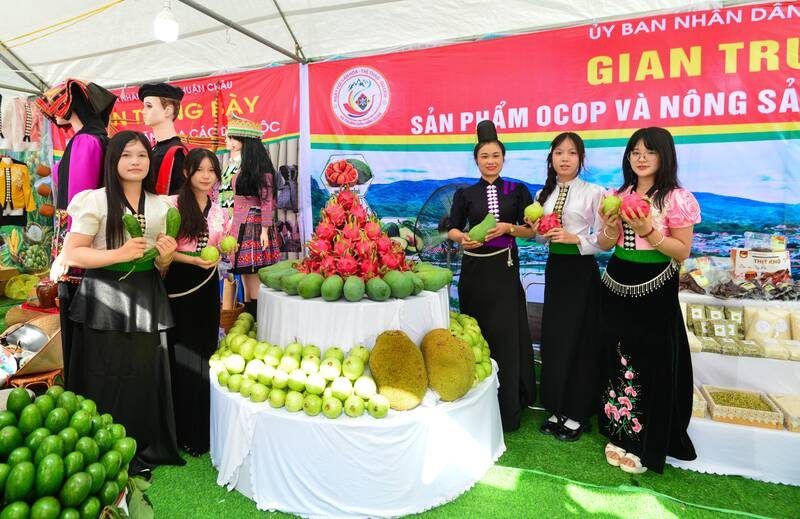
The festival fully recreated traditional rituals such as Xên at Tu Sửa Tảư, Tu Sửa Nưa, and the Tế Ta ritual. After the rituals, there was a xòe dance program, cultural exchanges, and many unique cultural activities, attracting a large number of local people and tourists to participate.
The reconstruction of the festival not only contributes to preserving and promoting the traditional cultural values of the Thai ethnic group but also creates a highlight for the development of community tourism, promoting the image of the people and culture of Sơn La to domestic and international tourists.
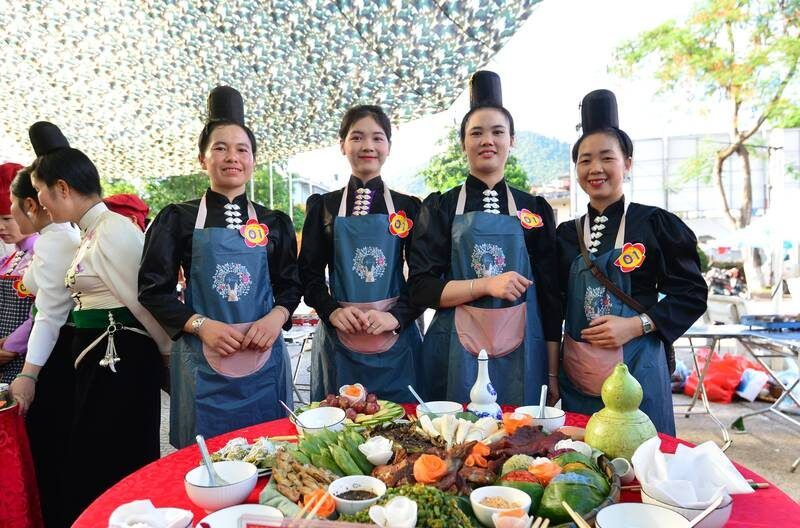
The Xên mường and Xên bản festival is one of the typical traditional festivals reflecting the spiritual and cultural life of the Thai ethnic group in Sơn La. With sacred rituals, unique cultural activities, and the strong spirit of community solidarity, the festival not only contributes to preserving the cultural heritage of the ethnic group but also becomes an attractive cultural tourism product of the Northwest region. Visiting Sơn La during the festival season, tourists will have the opportunity to immerse themselves in a rich cultural space, fully experiencing the traditional beauty preserved through generations.
Bình Luận:
0