






Mường Sang Rain Praying Festival – A Unique Cultural Belief Of The White Thai People In Moc Chau.
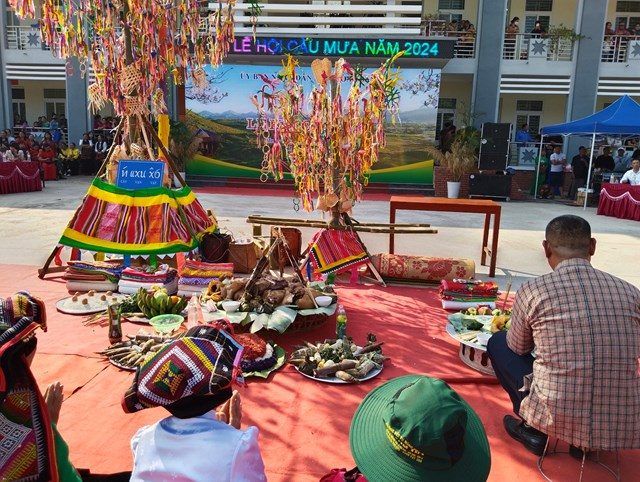
The Mường Sang Rain Praying Festival is one of the most distinctive traditional festivals of the White Thai ethnic group in Moc Chau district, Son La province. Not only does it symbolize the hope for favorable rain and wind, bountiful harvests, but the festival also reflects the rich spiritual life, culture, and the close relationship between humans and nature. After many generations of preservation, the festival remains intact and has become one of the attractive cultural highlights for visitors when coming to Moc Chau.
Origin and Meaning of the Mường Sang Rain Praying Festival
Son La is home to 12 ethnic groups, among which the Thai people make up more than half of the population. The Thai people in Son La consist of two main branches: Black Thai and White Thai, each possessing a rich treasure of traditional culture. For the White Thai people in Mường Sang commune, Moc Chau district, the Rain Praying Festival is the most important ritual of the year.
Since ancient times, the lives of the local people have mainly depended on wet rice cultivation, so water plays a decisive role in crop yields. When entering the first sowing season of the year, the locals hold a festival to pray to the deities and Mr. Then (the Sky) for favorable rains, helping plants grow, ensuring a good harvest, and a prosperous life.
Not only does the festival symbolize rain praying, but it also conveys a message of gratitude to nature, educating the younger generation about the importance of protecting water sources, preserving the living environment, and promoting community solidarity.
Time and Venue of the Festival
The Rain Praying Festival is held on the 15th day of the second lunar month every year in Mường Sang commune, Moc Chau district, Son La province.
This is the time to begin a new harvest season, when the locals prepare to go to the fields for sowing. All the villagers participate in rituals and cultural activities, creating a very lively, sacred atmosphere rich in ethnic identity.
Preparations Before the Festival
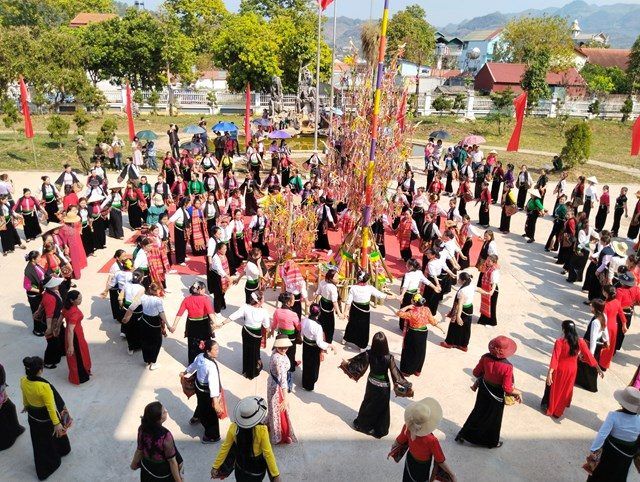
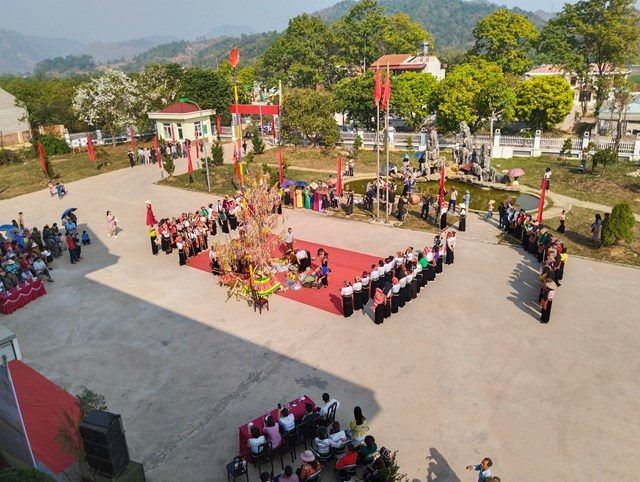
- Before the festival takes place, the villagers choose a large piece of land to erect the ceremonial pole – the central symbol of the festival.
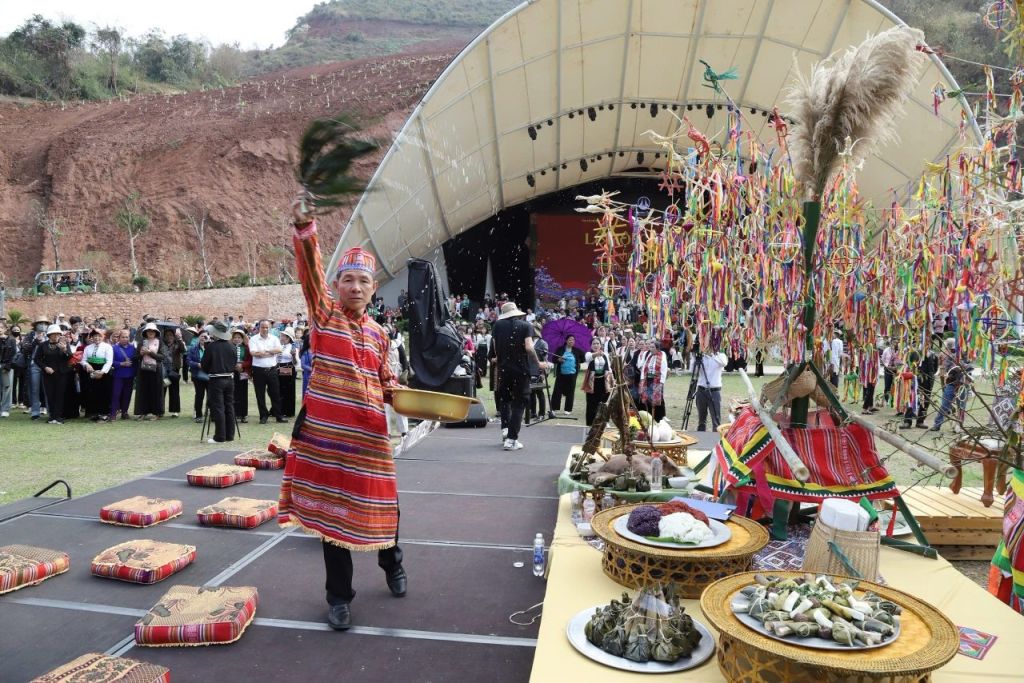
The ceremonial pole is decorated with many items that hold spiritual significance such as:
Bamboo woven birds and cicadas, symbolizing messengers carrying the villagers' prayers to Mr. Then.
- Small cages containing chicken eggs.
- Shells, representing drought, lack of water, and the desire for rain from the heavens.
The preparation for the festival is a community effort, reflecting the spirit of solidarity and shared responsibility in the cultural life of the White Thai people.
The Ritual – Sacred Ceremonies for Favorable Rain and Wind
The ritual is the most important part of the Rain Praying Festival and consists of three main ceremonies:
- Offering to the land deity
- Offering to the water deity
- Praying for rain
Right from early morning on the main festival day, a widowed woman from the village will carry two baskets filled with water, going to each household to invite everyone to join the festival. According to folk beliefs, this image symbolizes purity and sincerity before the deities.
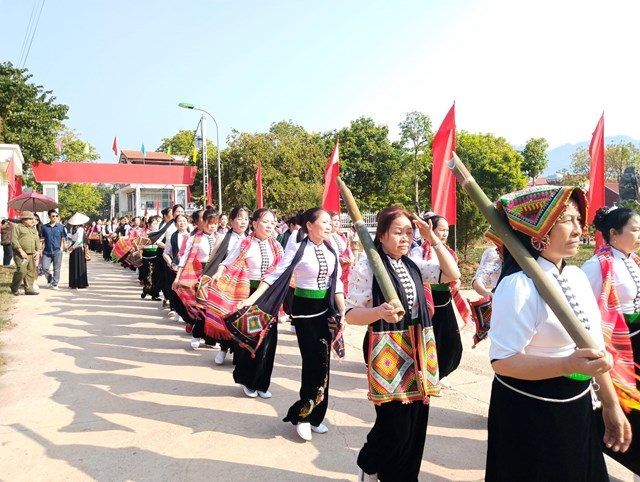
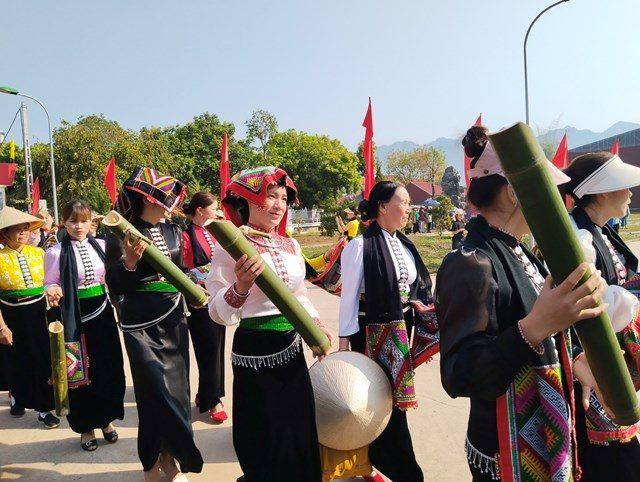
After that, the shaman along with male and female representatives from the village, dressed in traditional costumes, lead the procession to the water source. Here, offerings are made to the land and water deities to ask for permission for the sacred water to serve the rituals.
The water taken from the source will be placed around the ceremonial pole. This is considered sacred water that brings life to the entire village.
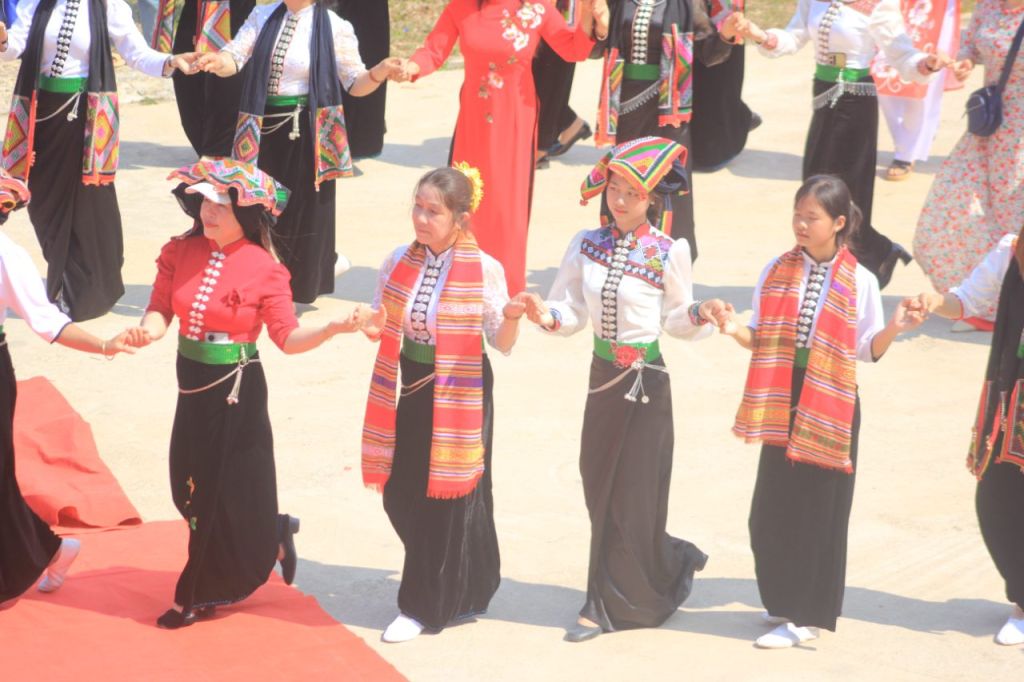
Next is the rain praying ceremony. In a solemn atmosphere, the shaman recites a prayer to Mr. Then about the difficulties faced by the villagers due to lack of water, failed crops, and withered plants. At the same time, he prays for timely rains to nourish the fields and ensure a prosperous life for the people.
At the end of the prayer, it is believed that Mr. Then will accept the villagers' prayers and grant them water, marking the beginning of a new year filled with hopes for bountiful harvests.
The Festival – A Colorful Cultural Space
After the solemn rituals, the festival features many cultural activities, artistic performances, and unique folk games.
The sounds of drums and gongs, along with traditional dances, resonate throughout the village. Water praying dances, water welcoming dances, and circle dances are performed to the lively sounds of the flute and drums, attracting many locals and visitors to join in the festive atmosphere.
In addition, there are many folk games rich in the identity of the Thai people such as:
- Throwing the ball
- Fast-paced games
- Shooting arrows
- Traditional sports activities
These activities not only create a joyful atmosphere after the rituals but also help strengthen community bonds and preserve traditional cultural values across generations.
Cultural Values and Humanitarian Significance
The Mường Sang Rain Praying Festival clearly reflects the worldview and spiritual life of the White Thai people. In the beliefs of the locals, humans always live in harmony with nature, respect natural forces, and are grateful for the water source that nurtures life.
Through the festival, the people express their hopes for a peaceful life, bountiful harvests, happy families, and village development. At the same time, the festival also contributes to educating the younger generation about ethnic traditions, raising awareness of environmental protection, and preserving natural water sources.
This is also an opportunity for the community to meet, interact, strengthen solidarity, and pass on valuable cultural values to their descendants.
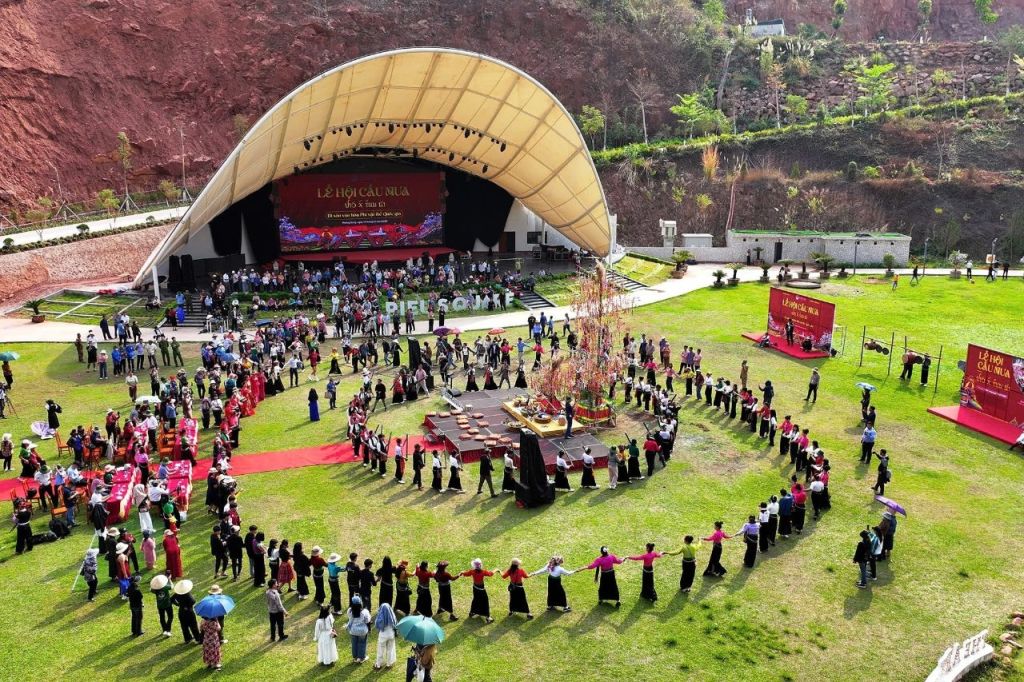
The Rain Praying Festival is Recognized as a National Intangible Cultural Heritage
With its distinctive historical, cultural, and spiritual values, the Rain Praying Festival of the White Thai people in Mường Sang has been recognized as a National Intangible Cultural Heritage.
This title not only helps preserve a beautiful traditional cultural aspect of the Thai ethnic group but also creates a unique cultural tourism product for Moc Chau. Each festival season, a large number of domestic and international tourists come to learn about the unique rituals, enjoy folk art performances, and experience the cultural space typical of the Northwest mountainous region.
Experience Participating in the Mường Sang Rain Praying Festival
If you have the opportunity to visit Moc Chau around mid-February of the lunar calendar, you should take the time to attend the Rain Praying Festival to fully experience the cultural identity of the White Thai people.
When participating in the festival, visitors should choose polite attire, respect the sacred space during the rituals, and follow the guidance of the organizers as well as the local people. After the rituals, don’t miss the chance to join in the traditional circle dance, enjoy the local specialties of the Northwest, and explore the natural beauty of Moc Chau.
Bình Luận:
0