





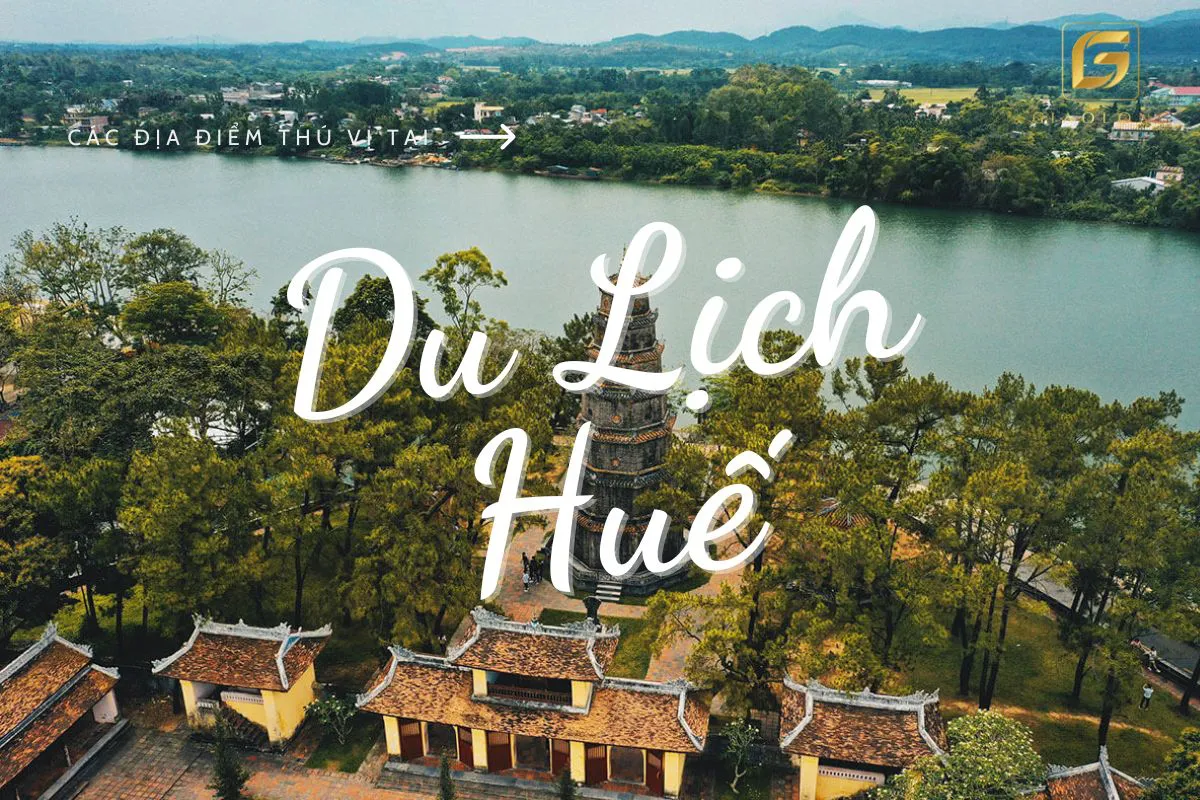
The Imperial City Of Huế - Where The Power Of The Nguyễn Dynasty Leaves Its Mark Through The Passage Of Time.
Hue Citadel - Where the power of the Nguyen dynasty leaves its mark through time
Amidst the slow and solemn pace of the ancient capital, Hue Citadel stands as a vibrant historical witness. Not only was it the center of power for over a century of the Nguyen dynasty, but Hue Citadel is also a place where the essence of Eastern feudal architectural thought and the depth of Vietnamese culture crystallizes. Each moss-covered wall, each soaring roof of the palace tells the story of a glorious past that has faded but never disappeared.
1. Where is Hue Citadel?
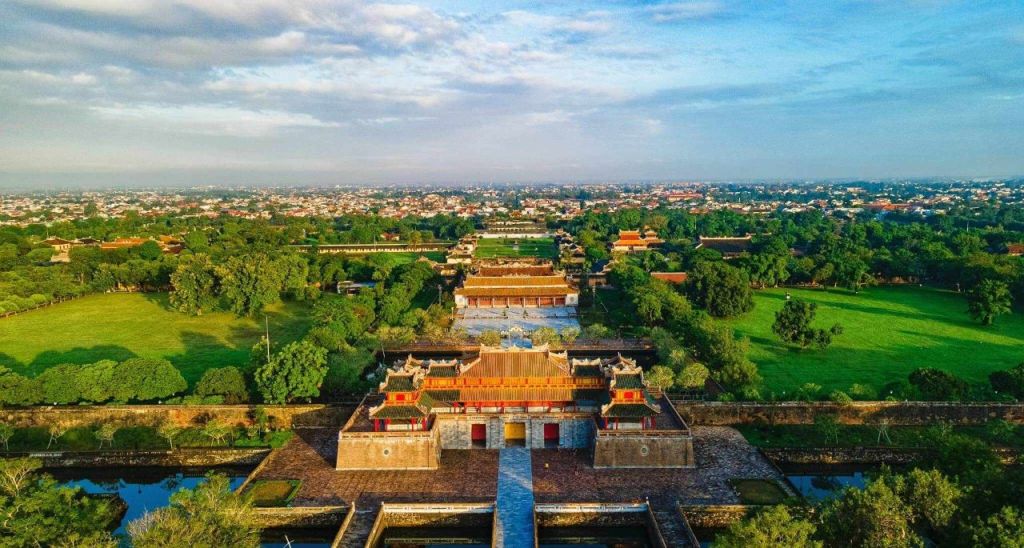
Hue Citadel is located right in the center of Hue, on the northern bank of the Perfume River, in Phu Xuan ward. With an area of over 520 hectares, this is a large-scale ancient citadel that served as the capital of the Nguyen dynasty for 143 years (1802 – 1945).
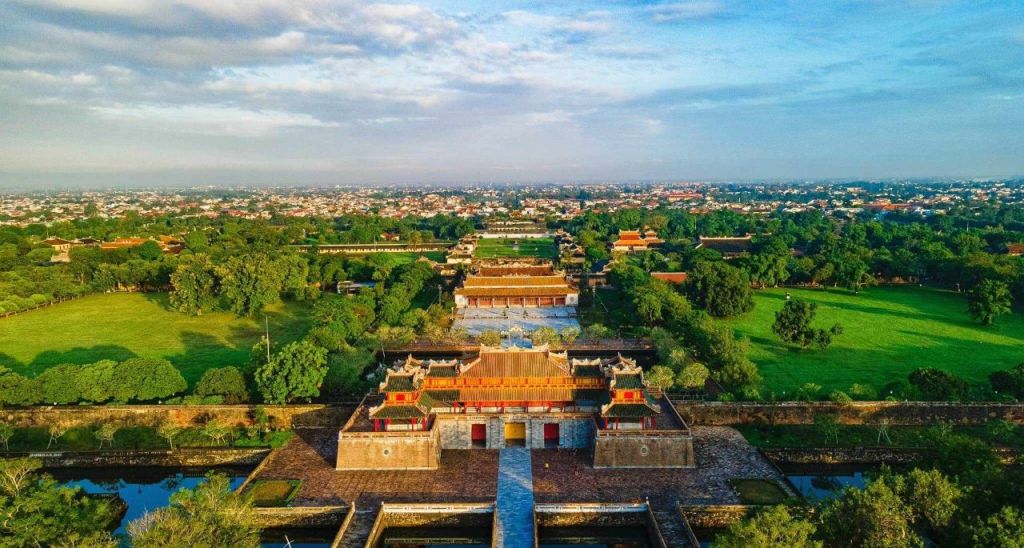
Hue Citadel is located right in the center of Hue, on the northern bank of the Perfume River
The entire structure is part of the Complex of Hue Monuments, recognized by UNESCO as a World Cultural Heritage site in 1993, becoming a pride not only of Hue but of all Vietnam.
2. History of formation – The imprint of a dynasty
The planning of Hue Citadel began in 1803, under the direct guidance of Emperor Gia Long. After surveying the terrain, the construction officially commenced in the summer of 1805.
In the early stages, the court mobilized about 30,000 workers to dig moats, build ramparts, and adjust the river's course. By 1809, a system of 10 gates was built, creating a solid defense layer. In 1818, the scale of construction expanded with over 80,000 people, focusing on tiling and finishing all four sides of the citadel.
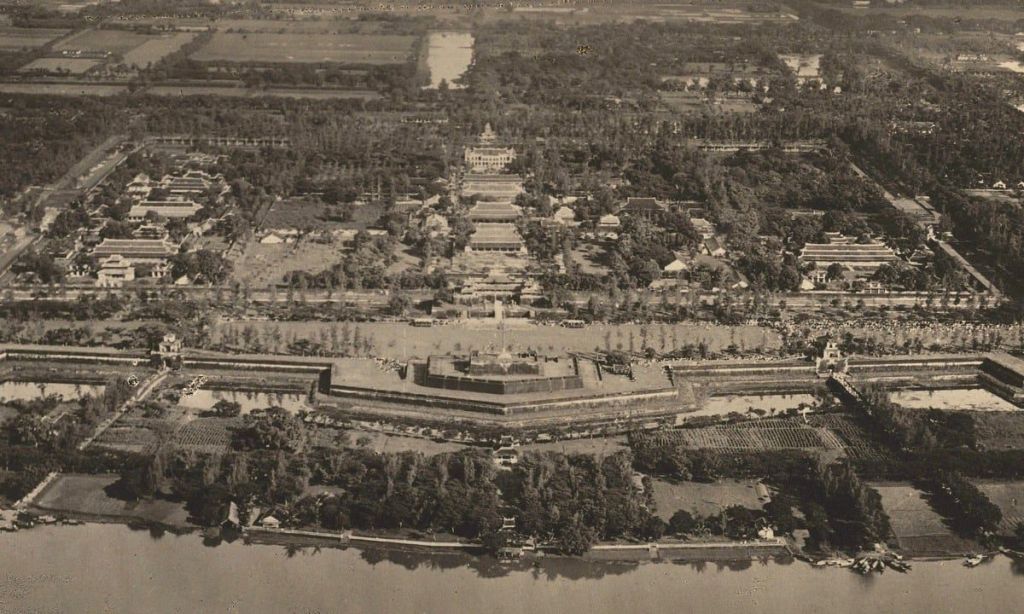
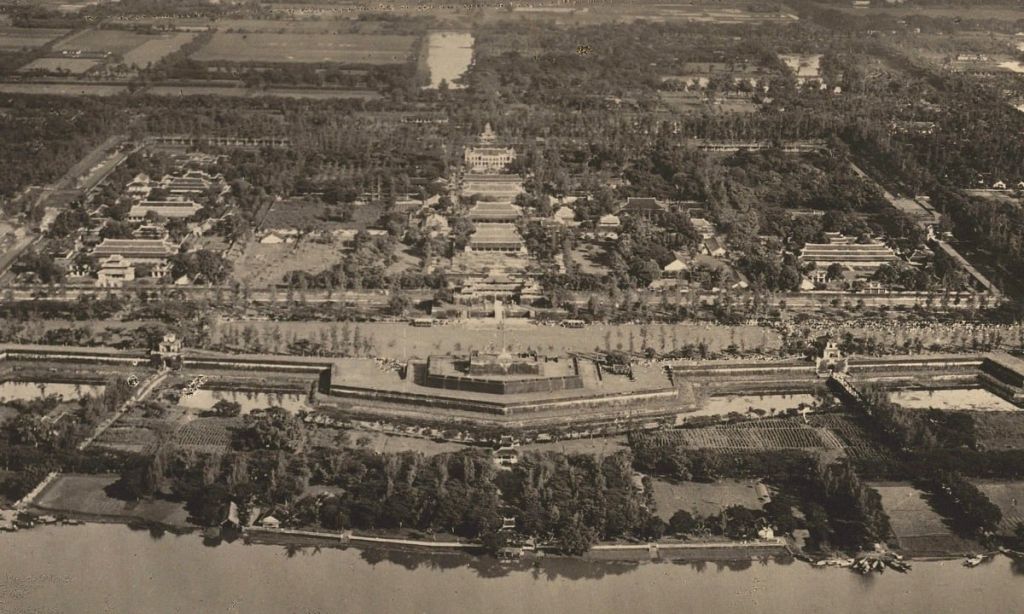
Image of Hue Citadel in the past
Under the reign of Minh Mang, from 1831 – 1832, defensive structures continued to be reinforced, making Hue Citadel the most important political – administrative – military center of the country at that time.
3. The Imperial City of Hue – The center of royal power
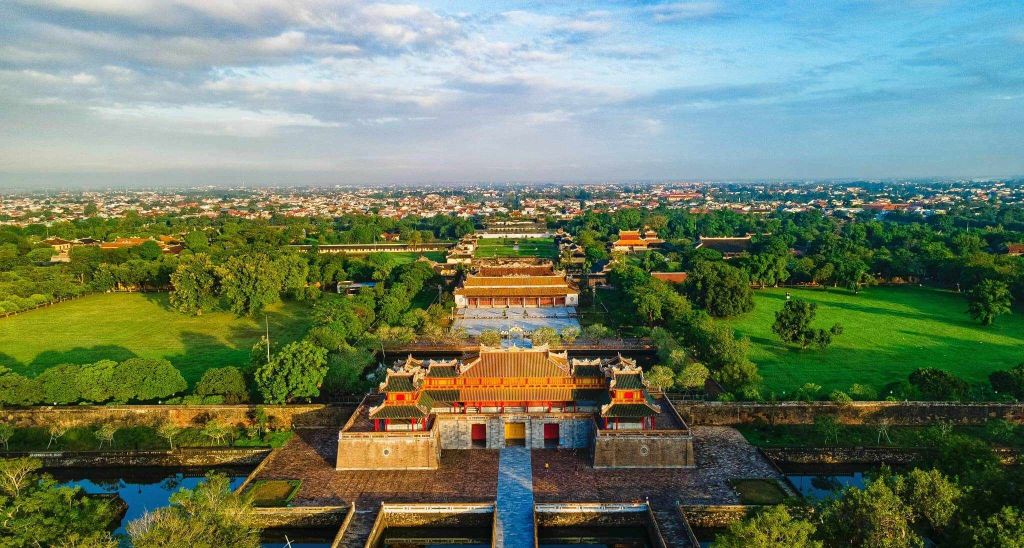
Inside the Citadel is the Imperial City of Hue, which includes the Royal City and the Forbidden City. This is where major ceremonies, court activities, and the daily life of the king and the Nguyen royal family took place.
3.1 Ngo Mon – The gate of authority of the Royal City
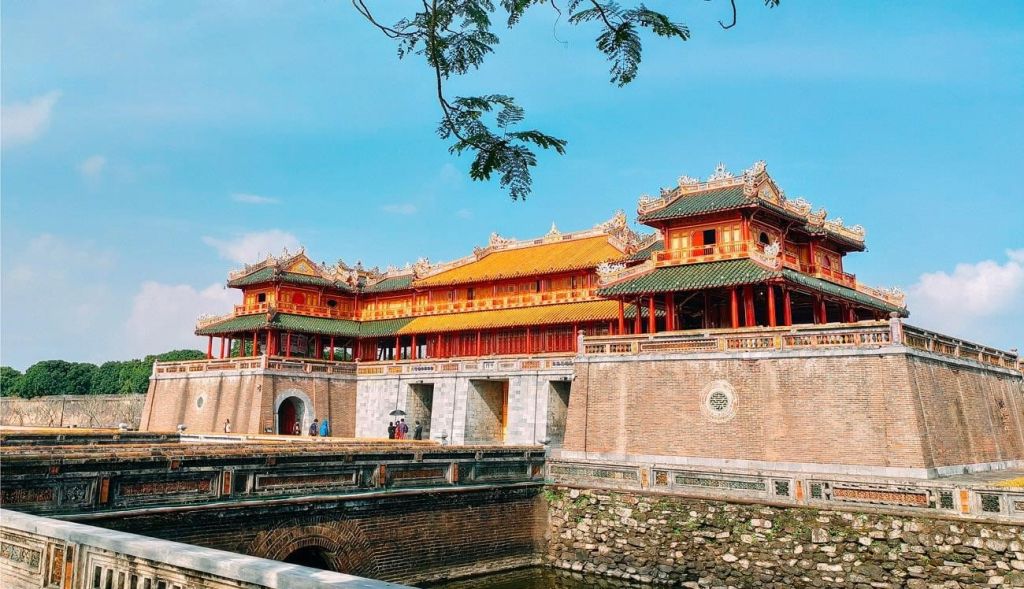
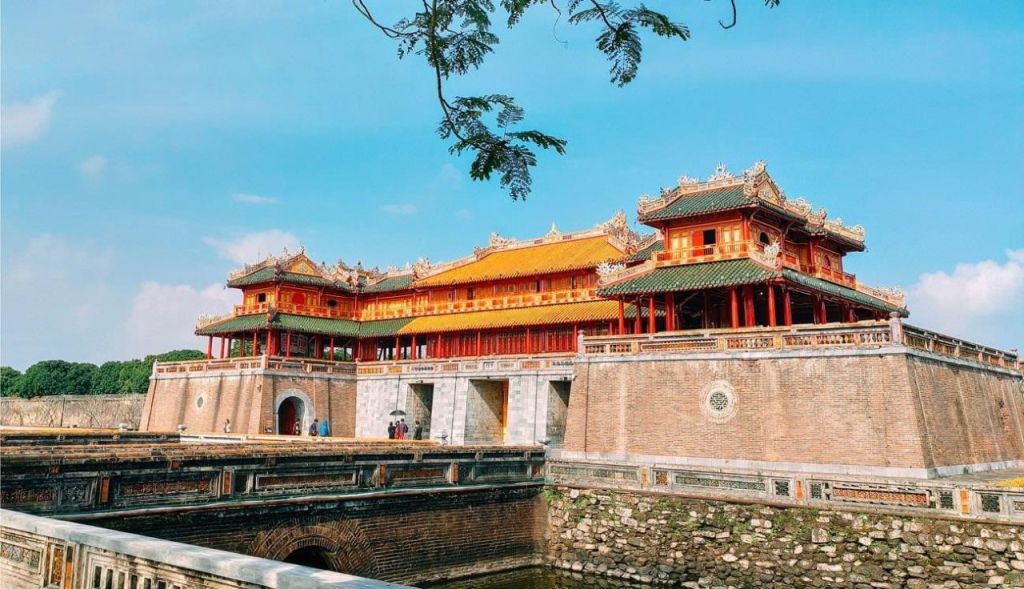
Ngo Mon is located on the south side of the Royal City, serving as the main gate and a familiar symbol of Hue. The structure is highlighted by the majestic Five Phoenix Pavilion, which has witnessed many significant historical events of the Nguyen dynasty.
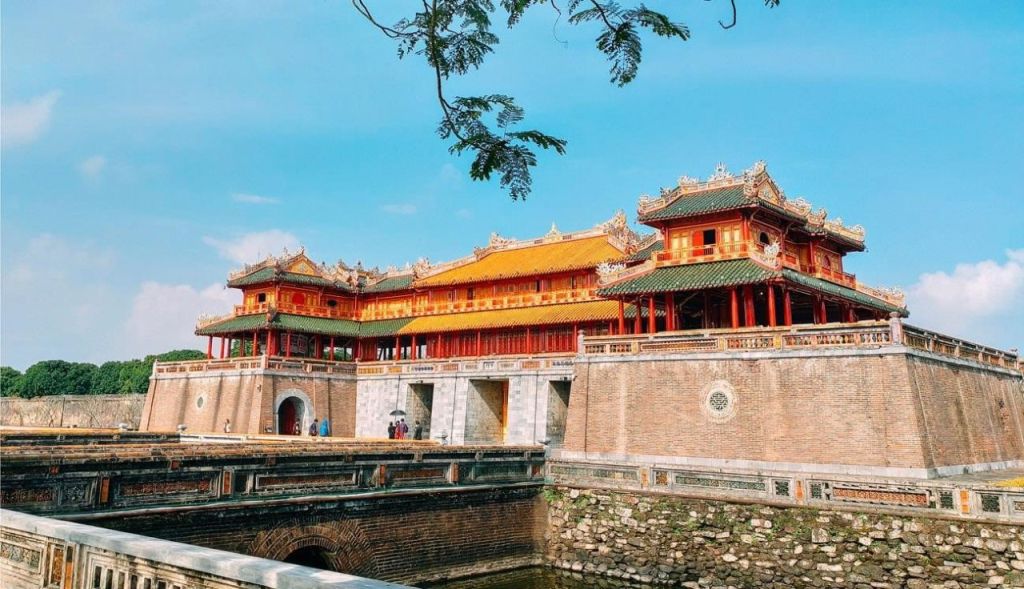
Ngo Mon Gate of Hue Citadel - A typical architecture of the Nguyen era
3.2 Thai Hoa Palace – The place of coronation and court sessions
Thai Hoa Palace was built in 1805 and is the venue for major ceremonies such as coronations and grand court sessions. The spacious area, with its royal glazed tile roof and the system of red-painted columns gilded with gold, reflects the power and prosperity of the dynasty.
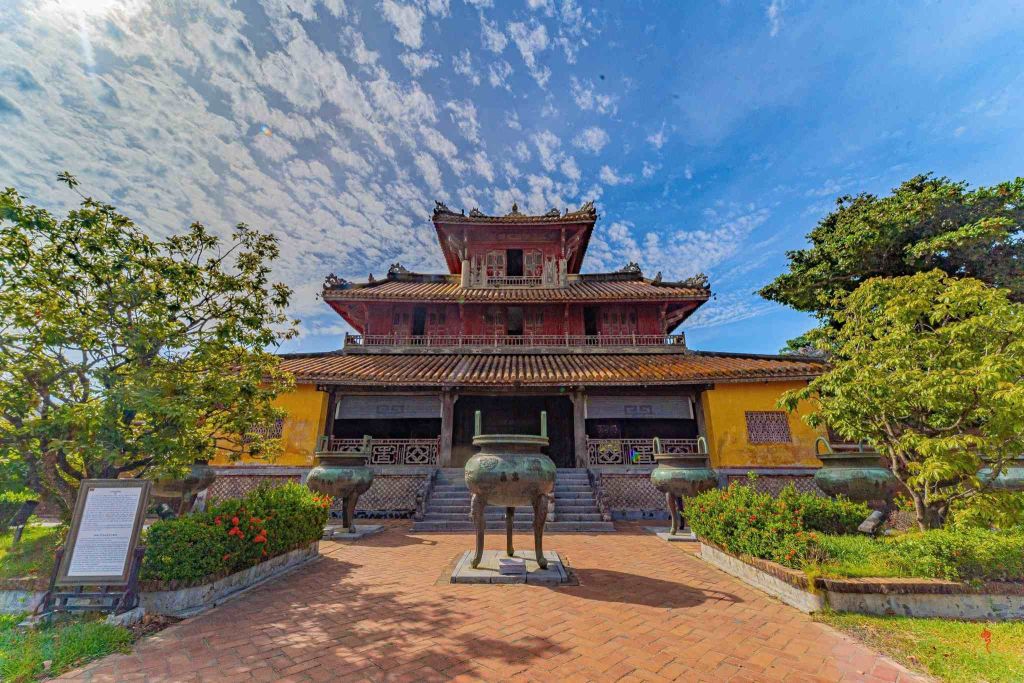
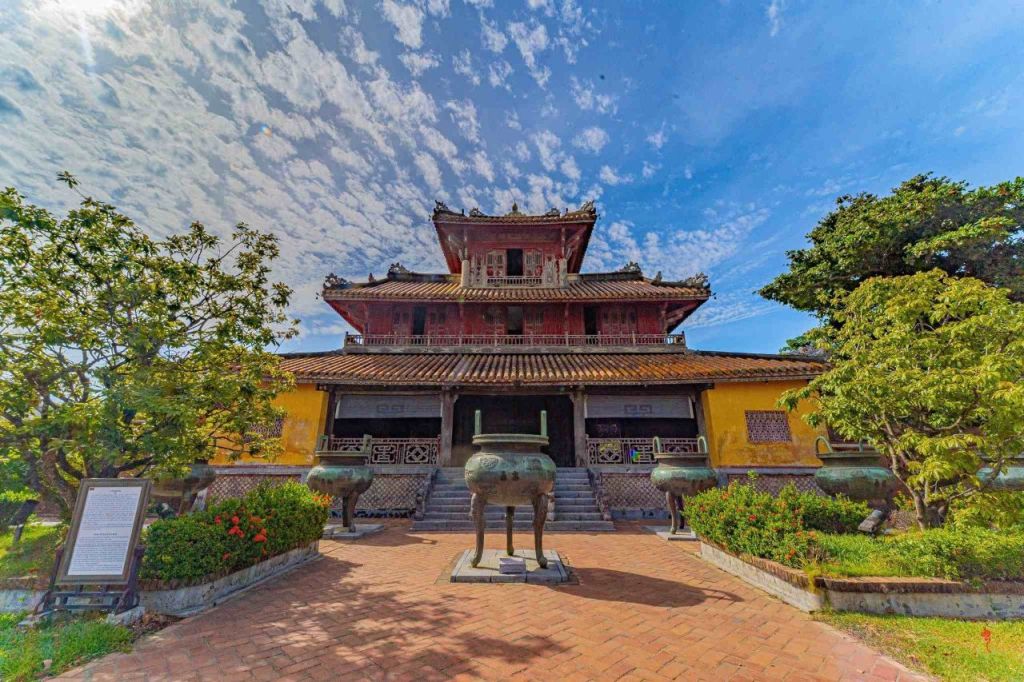
3.3 Hien Lam Pavilion – The pinnacle of wooden architecture
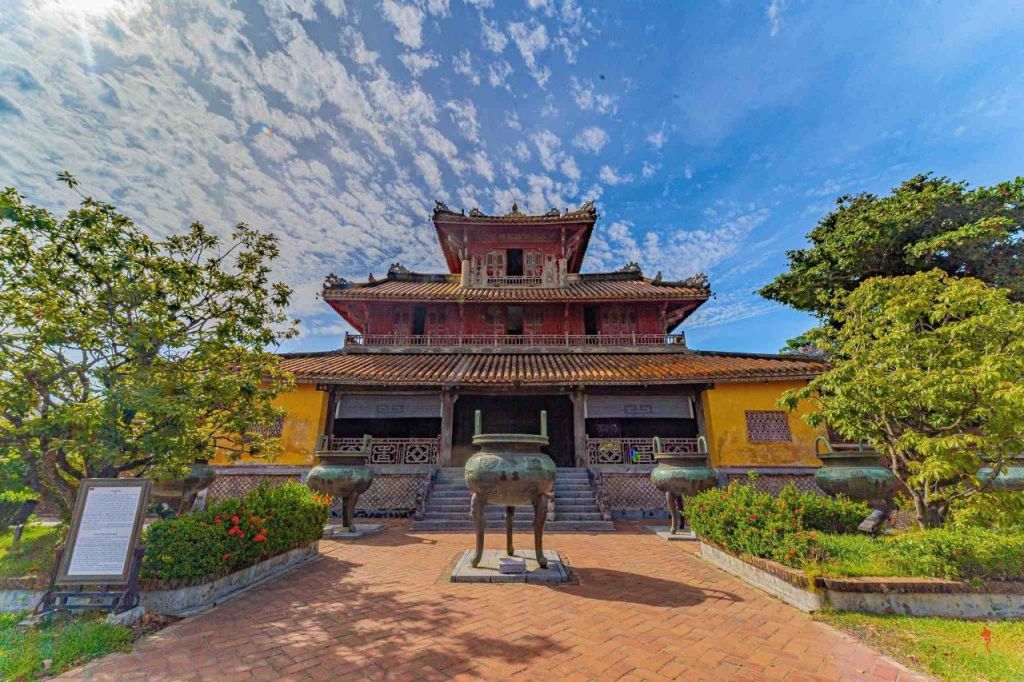
Constructed during the reign of Minh Mang (1821 – 1822), Hien Lam Pavilion is the tallest structure in the Citadel, notable for its exquisite carvings and harmonious layout.
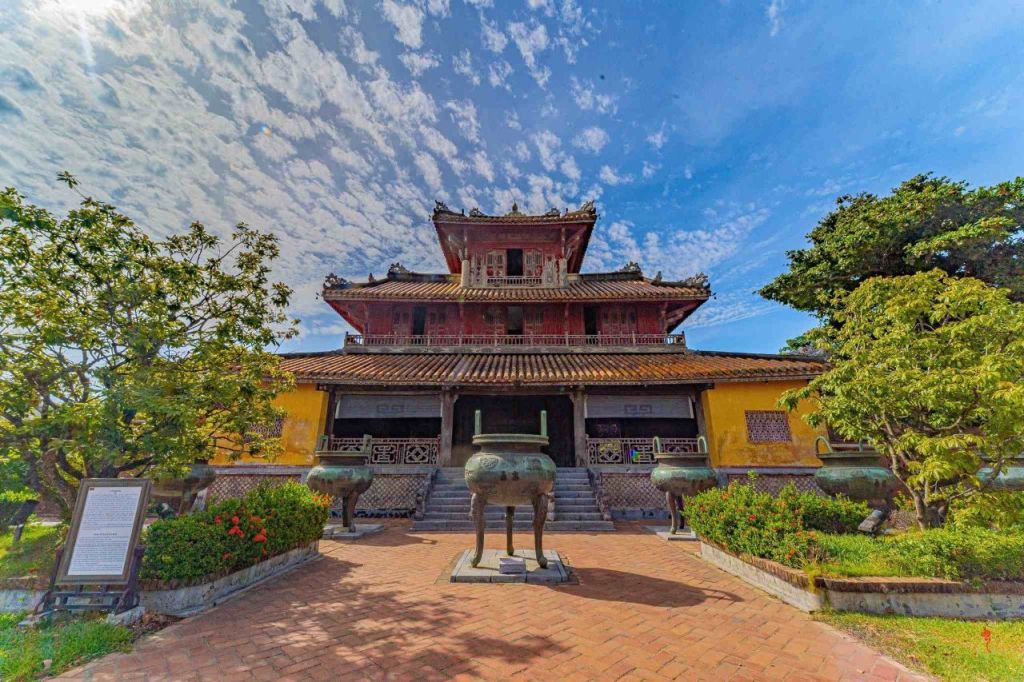
Hien Lam Pavilion is a symbol of the exquisite art of the Imperial City of Hue
3.4 Ky Dai – The flagpole of the capital
Ky Dai Hue was built in 1807, located by the Perfume River. This is not only a military structure but also a majestic symbol of the ancient capital.
3.5 Kien Trung Palace – The intersection of East and West
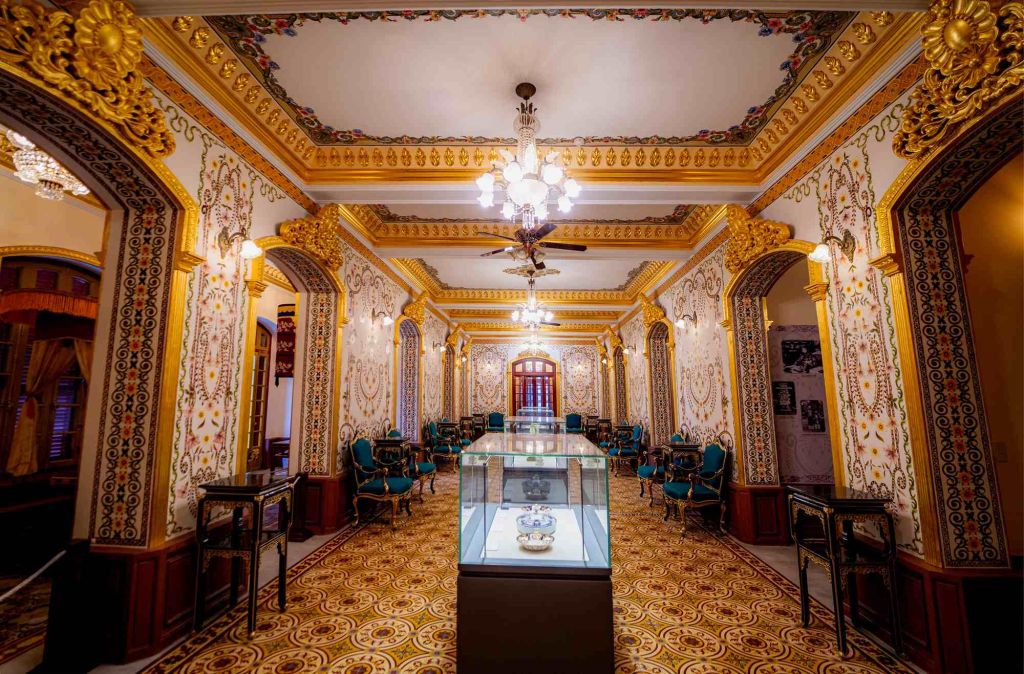
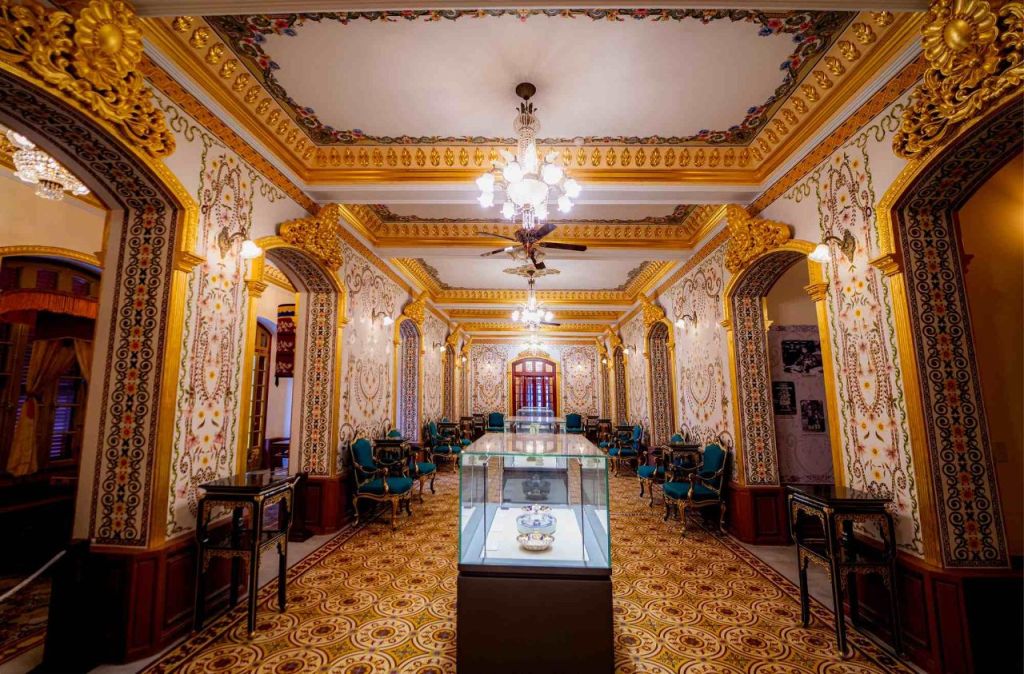
Built between 1921 and 1923, Kien Trung Palace features an architectural style that blends Asian and European elements, and was once the residence of Emperor Khai Dinh and Emperor Bao Dai. The structure was restored in 2024, becoming a new highlight in the Imperial City.
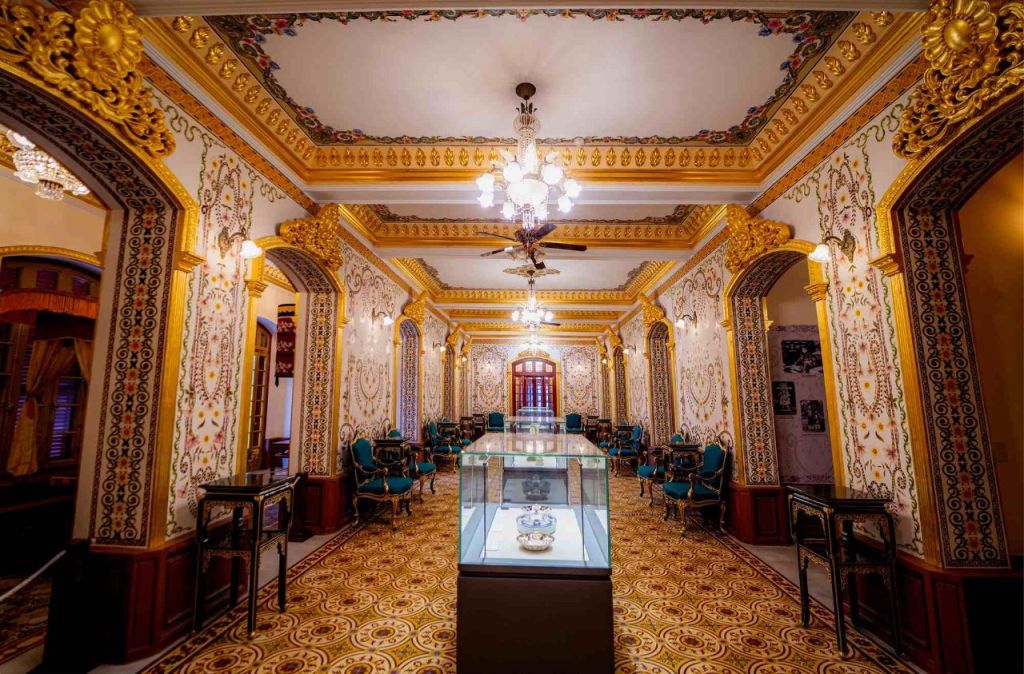
The splendid interior space of Kien Trung Palace
3.6 Long An Palace & Imperial Fine Arts Museum
Long An Palace – where Emperor Thieu Tri rested and composed poetry – is now the Imperial Fine Arts Museum of Hue, preserving hundreds of valuable artifacts from the Nguyen dynasty.
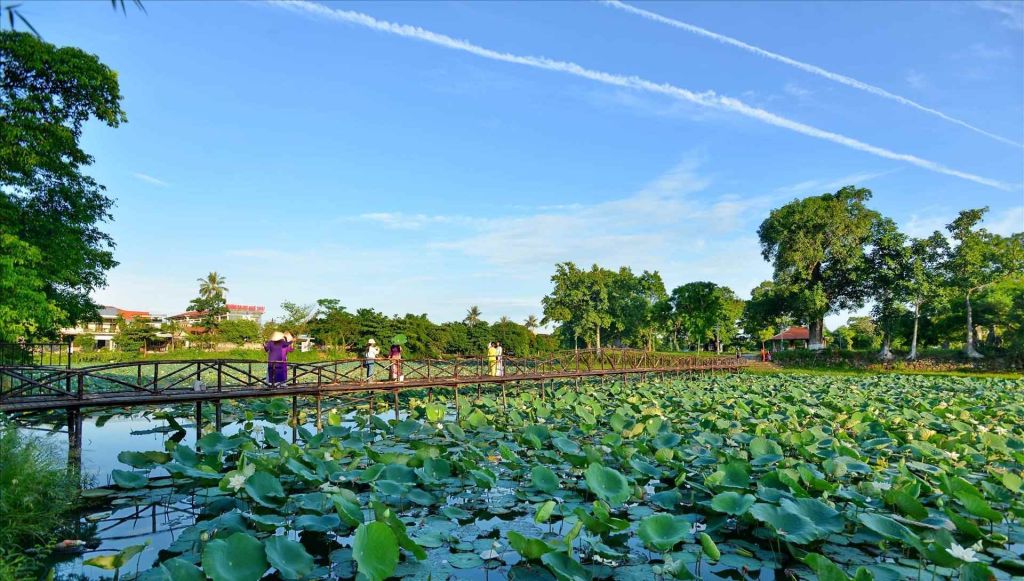
3.7 Tinh Tam Lake – A poetic space within the royal palace
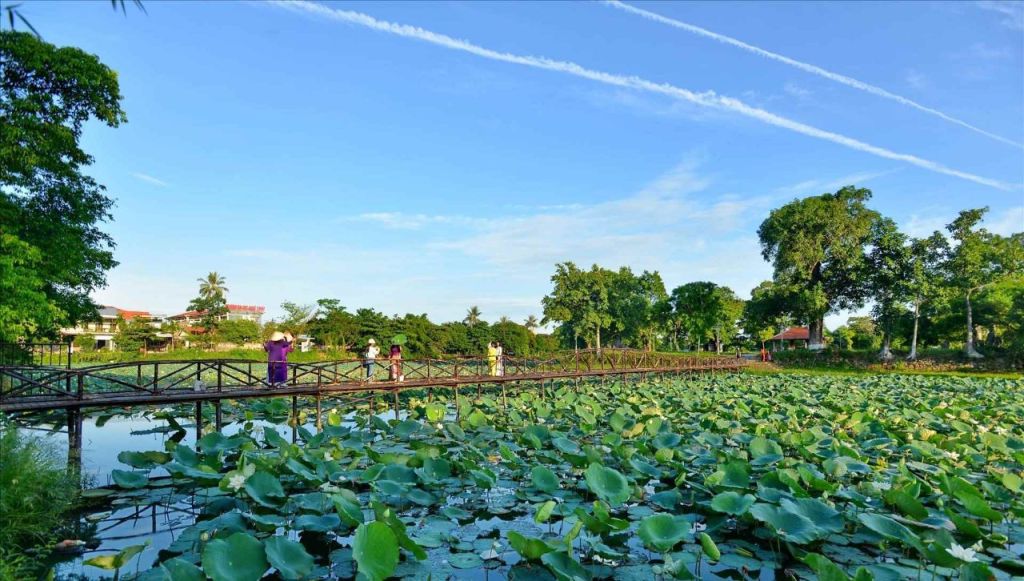
Tinh Tam Lake was once a place for kings to admire lotus flowers and compose poetry, with a serene landscape harmonizing between nature and architecture.
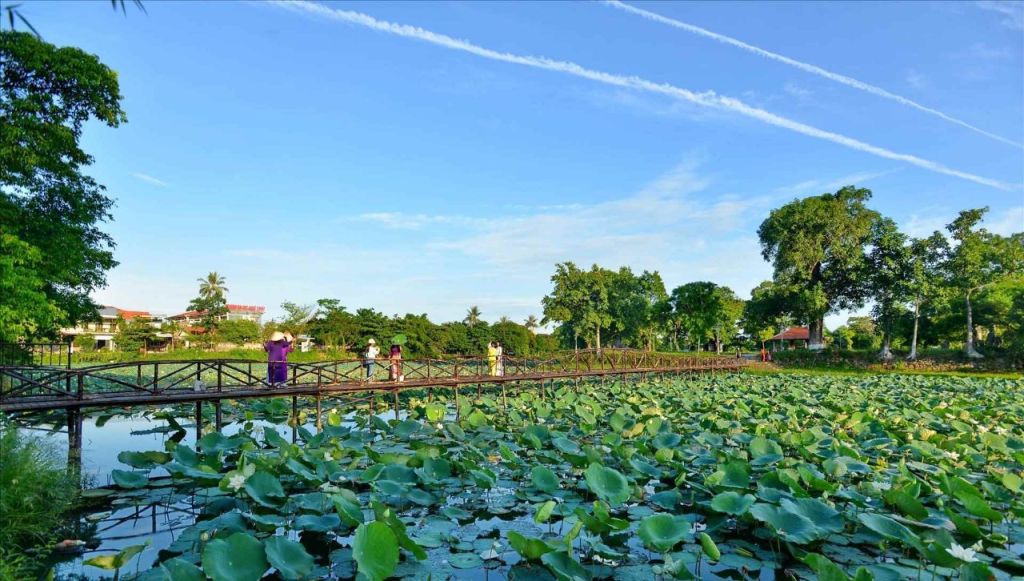
Tourists taking photos at Tinh Tam Lake in Hue during the lotus blooming season
3.8 Duyet Thi Duong & Thai Binh Lau
The Duyet Thi Duong theater is where royal court performances are enjoyed, while Thai Binh Lau is a resting place for sightseeing and poetry composition by Emperor Khai Dinh, notable for its vibrant ceramic decorations.
4. The enduring cultural value of Hue Citadel
Hue Citadel is not only a historical monument but also a treasure trove of unique cultural and artistic heritage. From architecture, fine arts, court rituals to royal music, all create a unique cultural space that is hard to find elsewhere.
When visiting Hue, merely strolling along the Perfume River or visiting the tombs is not enough. Take the time to step into Hue Citadel – to touch the depth of history and bring back a very unique feeling of the ancient capital.
--------------
Source: Vinpearl
Bình Luận:
0