






The Stilt House Architecture Of The Vân Kiều People: Cultural Value And Community Life.
The stilt house architecture of the Vân Kiều people: Cultural values and community life
The stilt houses of the Vân Kiều people are not only living spaces but also the crystallization of indigenous knowledge formed through a long process of adaptation to the natural conditions and living environment of the Trường Sơn region.
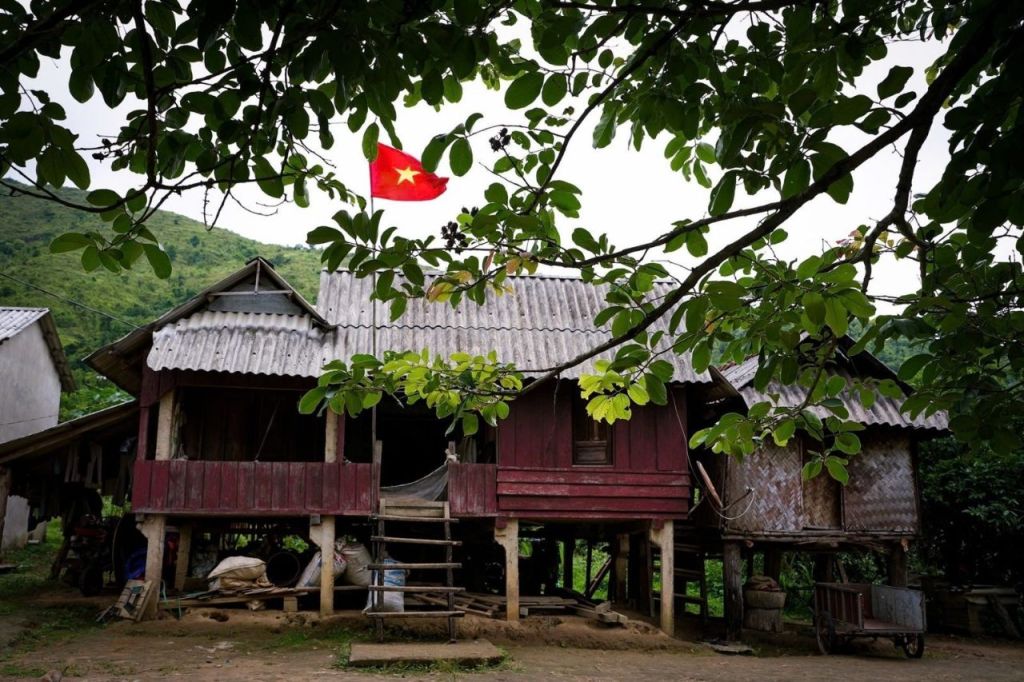
In the structure of the stilt house, one can clearly see the close relationship between humans and the mountains and forests, between material life and the spiritual world of the community. From the choice of location for building the house, construction materials to the organization of living space, everything reflects the way of life, social customs, and cultural values passed down through generations.
Studying the architecture of the stilt houses of the Vân Kiều people is thus also a way to approach the depth of community life and the cultural identity of an ethnic group closely connected to the vast wilderness.
1. The origin and formation process of the stilt house architecture of the Vân Kiều people
The architecture of the stilt houses of the Vân Kiều people originated thousands of years ago when they were one of the oldest inhabitants of the Trường Sơn - Tây Nguyên region. The nomadic lifestyle of shifting cultivation, hunting, and gathering has driven the formation of this type of house to adapt to the rugged hilly terrain, avoiding wild animals, floods, and dampness. The house is considered the "most beautiful product" created by their ancestors, witnessing all the ups and downs of life.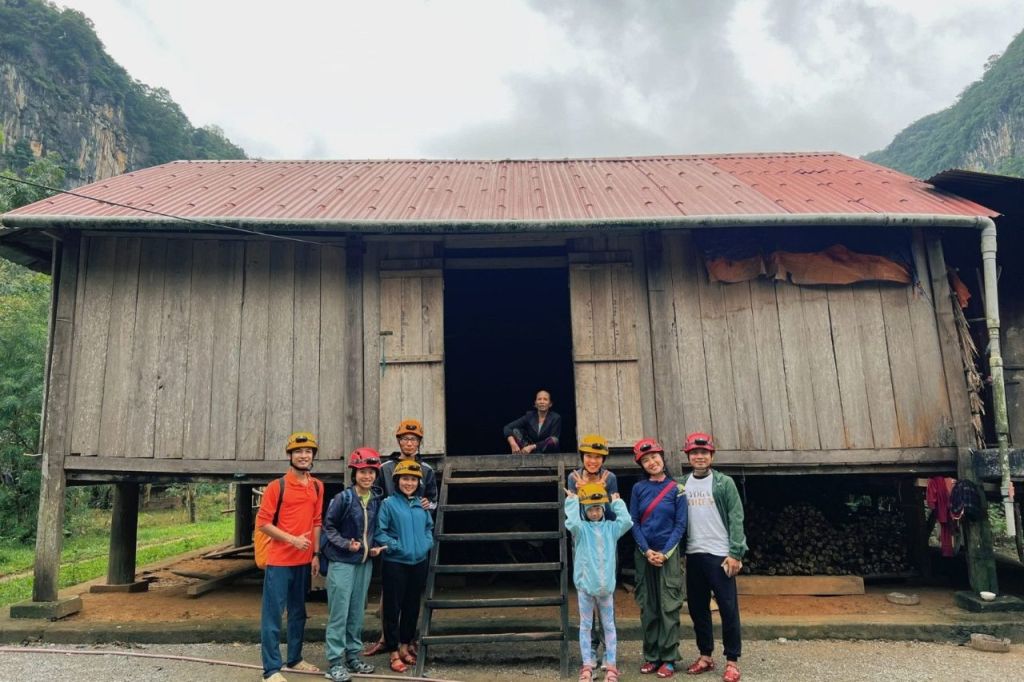
Photo: Vân Kiều people living in a stilt house
The formation process begins with choosing a location: backed against the mountain to block storms, facing a stream to regulate the life force. The homeowner uses 8 grains of fragrant sticky rice symbolizing 8 main pillars, placing them in a bamboo tube buried for three days; if the rice remains intact, then the house can be built, avoiding the west direction (the direction of ghosts). In river areas, houses are built in a straight line; in flat areas, houses are arranged in a circle around the community house (rông or guol), avoiding the roofs "facing" each other to prevent conflict. This reflects a philosophy of harmonious living, community bonding, formed from a self-sufficient lifestyle, close to nature. Over time, this architecture has been passed down through generations, becoming an indelible cultural symbol.
2. Characteristics of traditional stilt house architecture of the Vân Kiều people
The traditional stilt houses of the Vân Kiều people stand out with a simple yet sturdy structure, suitable for the harsh mountainous climate: "sheltered in winter, airy in summer." Houses typically have a floor elevated 1-2 meters above the ground, a rounded roof at the gable (characteristic of some groups like Trì, Khùa), with 4 walls and 3 main compartments. The roof slopes at about 60 degrees, covered in a rounded arch style at both ends, creating a unique shape like a boat or a melon.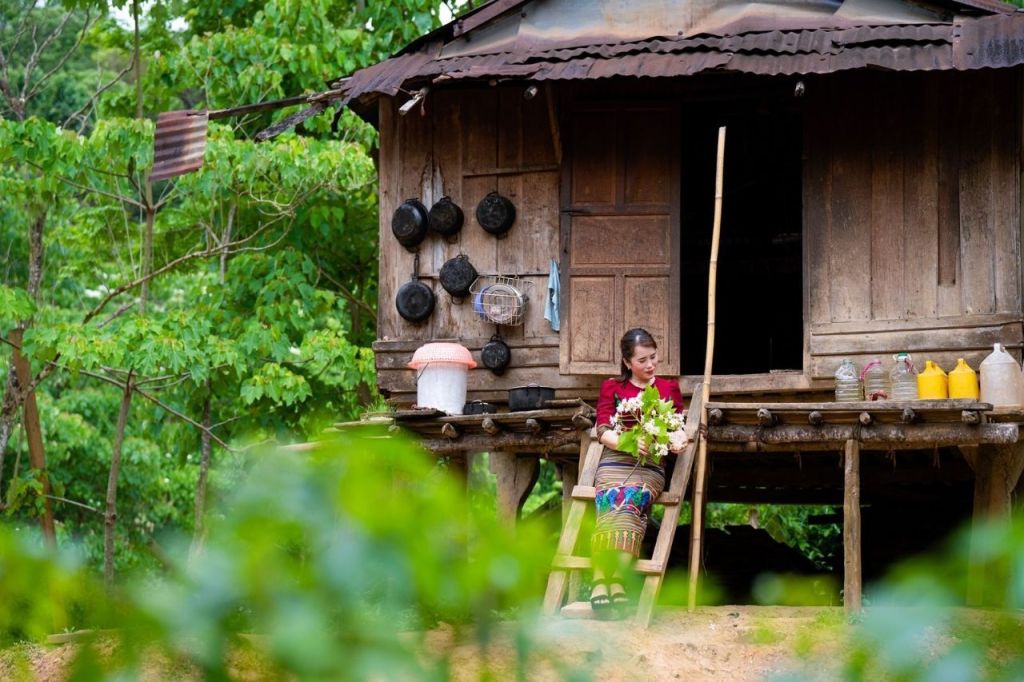
Photo: Stilt houses in the mountainous region of western Quảng Trị
The spirit pole (the main pillar) is the most important element, erected first and remains unchanged, symbolizing the soul of the house. The staircase is placed on the far right, convenient for guests and the owner to go up and down. The house has two types of doors: the main door for men, the side door for women, reflecting the gender division in culture. The time to build the house is chosen on auspicious days such as the 5th, 15th, 25th, or the 6th, 16th, 26th of each month, avoiding the first month (festival), the eighth month (rainy season), and the twelfth month (rest). Before moving in, the homeowner offers a buffalo, attaching buffalo horns to both ends of the roof to pray for peace from ancestors and Giàng (the village chief).
These characteristics not only ensure practicality but also carry spiritual significance, helping the stilt house become a sacred space in the lives of the Vân Kiều people.
3. Building materials for the stilt houses of the Vân Kiều people
The building materials for the stilt houses of the Vân Kiều people are mainly sourced from nature, reflecting harmony with the mountainous environment. Wood is the primary material for the house frame and main pillars, carefully selected from the forest, avoiding "ghost forests" and requiring permission from deities by chopping a tree overnight; if the axe remains intact, then it can be cut down. Bamboo and rattan are used for floors, walls, and stairs, ensuring flexibility and ventilation.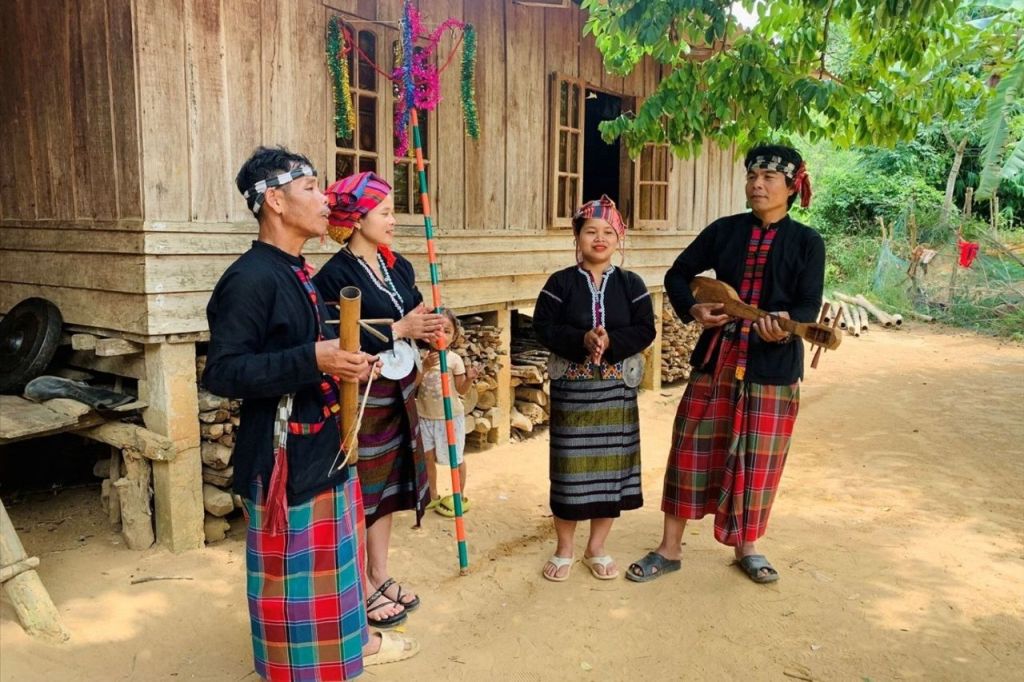
Photo: Stilt houses - Cultural identity of the Vân Kiều people
The roof is thatched with palm leaves, nipa leaves, or rattan, creating a steep slope for quick rainwater drainage. These materials are easy to find, environmentally friendly, and can be periodically replaced, helping the house withstand storms and floods. The choice of materials is also linked to spiritual rituals, such as using 8 grains of sticky rice symbolizing the main pillar, emphasizing the connection between humans and nature. Overall, the materials are not only inexpensive but also contribute to the rustic beauty and closeness of this architecture.
4. The structure of living space in the stilt houses of the Vân Kiều people
The living space in the stilt houses of the Vân Kiều people is designed logically, divided according to family hierarchy and daily needs. The house consists of 3 main compartments: the inner left compartment for the couple and small children, the middle compartment for adult children, and the outer right compartment for grandparents. Each compartment has its own cooking fire, but the two main kitchens stand out: the kitchen in the middle of the house used for offerings and lighting incense for ancestors; the side kitchen used for daily cooking.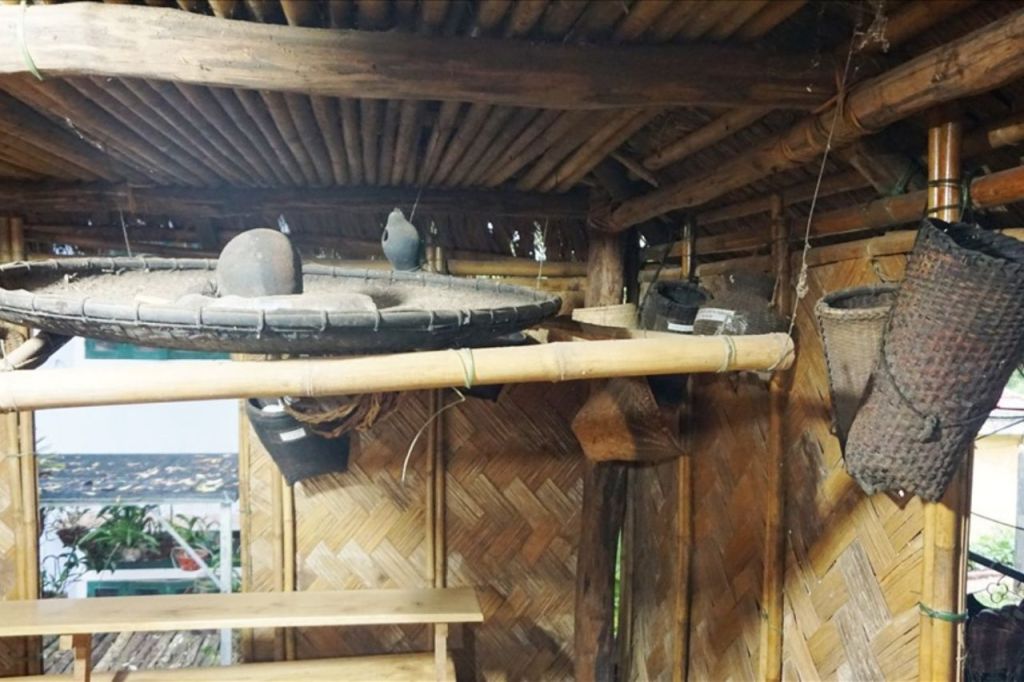
Photo: A corner inside the stilt house
The cooking fire is the cultural center, regarded as the "source of life" and the god of blessings, rarely extinguished; if not in use, it is covered with ash and rekindled when needed. The space around the fire is used for gatherings, storytelling, teaching children, warming up, and preserving food (hanging smoked meat and fish on the rafters). The floor of the house is not horizontal, and the house often has separate rooms for couples, elderly parents, and older children (in the Trì, Khùa, Ma Coong groups). Overall, this structure promotes family bonding while ensuring privacy and hygiene in the mountainous environment.
The stilt houses of the Vân Kiều people are not only shelters from rain and sun but also a cultural symbol deeply imprinted with local characteristics – a place where ancestral beliefs, folk wisdom, and a close harmony with nature converge. Every architectural detail, spiritual ritual, and spatial arrangement reflects a sustainable value system that emphasizes the symbiosis between humans and the mountains. Amidst the whirlpool of modernity and the movements of the era, the stilt houses still stand as a sturdy root, preserving the soul of the Vân Kiều people, from which the cultural identity of the ethnic group is passed down and continued through generations. Preserving the architecture of the stilt houses is also preserving the identity, an act of connecting with the roots and affirming the perpetuity of culture amidst the vast Trường Sơn wilderness.
Bình Luận:
0