






The Văn Miếu – Quốc Tử Giám Relic: What Does Vietnam's First University Have To Offer?
The Temple of Literature – Quoc Tu Giam: What does Vietnam's first university have?
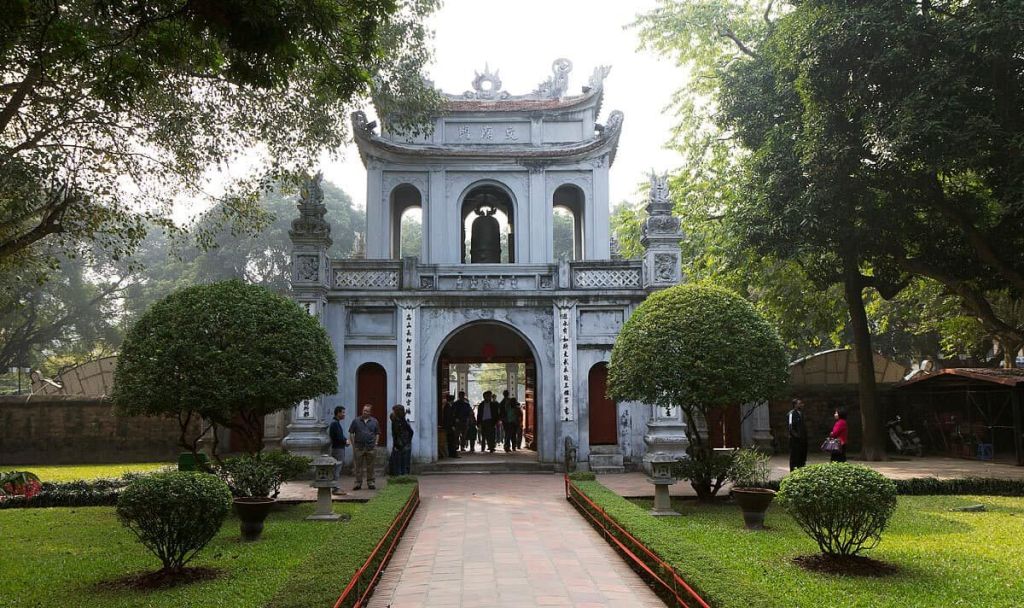
The Temple of Literature was built in 1070 (Photo: Internet)
Located in the bustling heart of Hanoi, the Temple of Literature – Quoc Tu Giam is a typical historical and cultural relic complex, closely associated with the tradition of learning and the spirit of respecting teachers in Vietnamese culture. Not only does it possess ancient and solemn beauty, but it is also considered the first university in Vietnam, having trained many talented individuals for the country over hundreds of years.
1. Introduction to the Temple of Literature – Quoc Tu Giam
The Temple of Literature was built in 1070, during the reign of King Ly Thanh Tong, to honor Confucius – the great sage of Confucianism – along with other talented individuals. In 1253, under the reign of King Tran Thai Tong, Quoc Tu Giam was established, becoming the center for training talents for the court. Not only royal descendants, but Quoc Tu Giam also expanded to accept children of commoners with outstanding academic performance.
During the reign of King Tran Minh Tong, the renowned scholar Chu Van An was appointed as the headmaster of Quoc Tu Giam – equivalent to the position of a principal today, directly teaching the princes and managing all educational activities. These milestones affirm that the Temple of Literature – Quoc Tu Giam is the first university and the largest educational center of Vietnam during the feudal period.
2. Overview of the architecture of the Temple of Literature – Quoc Tu Giam
The relic complex is imbued with traditional architectural style, characteristic of the early Nguyen dynasty, located on a rectangular land area of over 54,000 m², surrounded by four solid brick walls. The Temple of Literature is not only a place that preserves historical and educational values but also a familiar destination for students and tourists from all over to offer incense, visit, and learn about the tradition of learning in the nation.
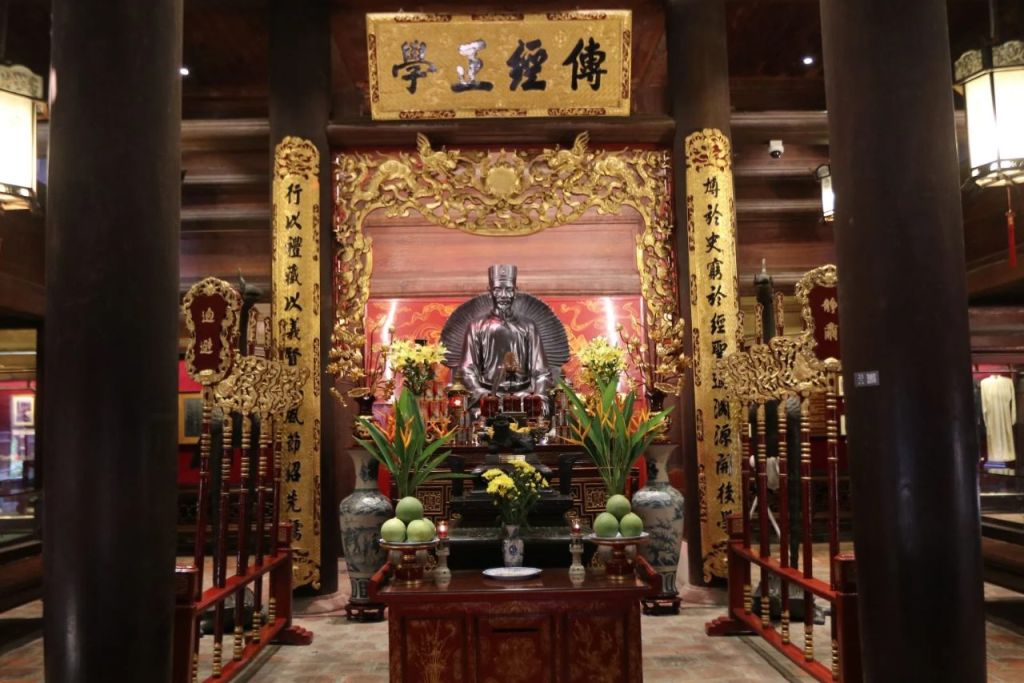
The relic complex is imbued with the traditional architectural style of the Nguyen dynasty (Photo: Internet)
3. Experience visiting the Temple of Literature – Quoc Tu Giam
3.1. Opening hours & ticket prices
- Opening hours: 8:00 AM – 5:00 PM (every day of the week)
- Ticket prices:
- Adults: 70,000 VND
- Vietnamese students: 35,000 VND (with ID)
- Senior citizens (60 years and older), severely disabled individuals: 35,000 VND
- Children under 16 years old: Free
In addition, the relic provides a multilingual automatic audio guide service for about 100,000 VND/machine, helping visitors gain a deeper understanding of each visiting item.
3.2. What is special about visiting the Temple of Literature – Quoc Tu Giam?
3.2.1. Dai Thanh GateThis is the main gate leading into the inner courtyard, built in a three-arch architectural style, symbolizing Humanity – Ritual – Justice. On the gate are patterns and couplets praising the Confucian education system. The two reliefs “Carp turning into a dragon” and “Tiger descending the mountain” express the aspiration for success, prosperity, and longevity.
3.2.2. Khue Van Cac
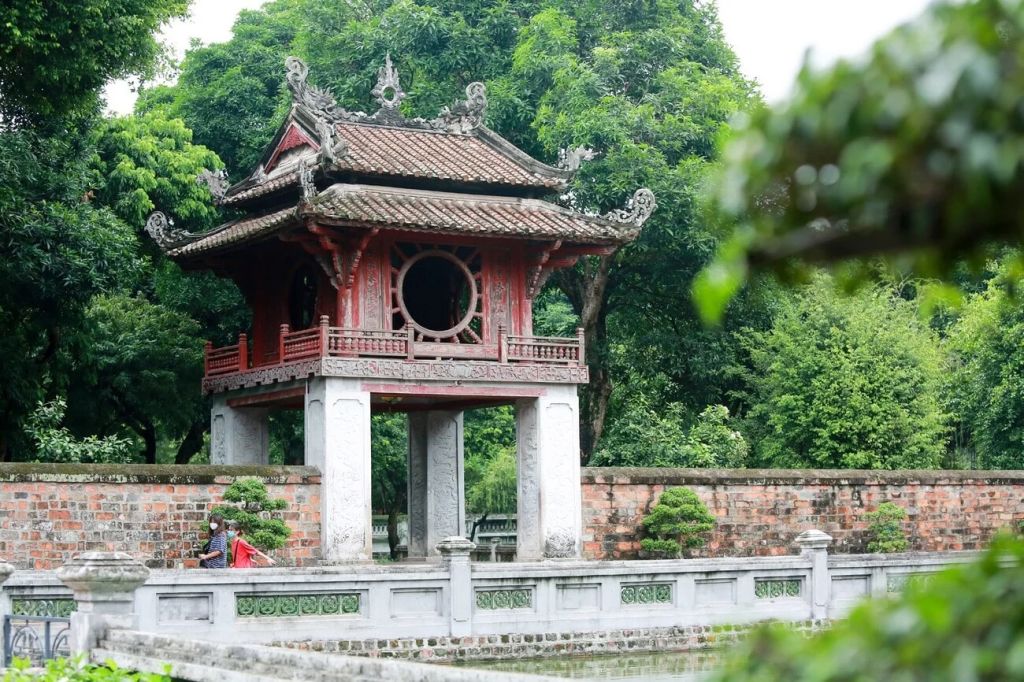
Khue Van Cac is the most prominent structure, considered a symbol of Hanoi. The two-story wooden house architecture, red tiled roof, and round door symbolize the sky and the light of knowledge. The image of Khue Van Cac appears in many cultural publications, becoming a symbol of the Vietnamese tradition of learning.
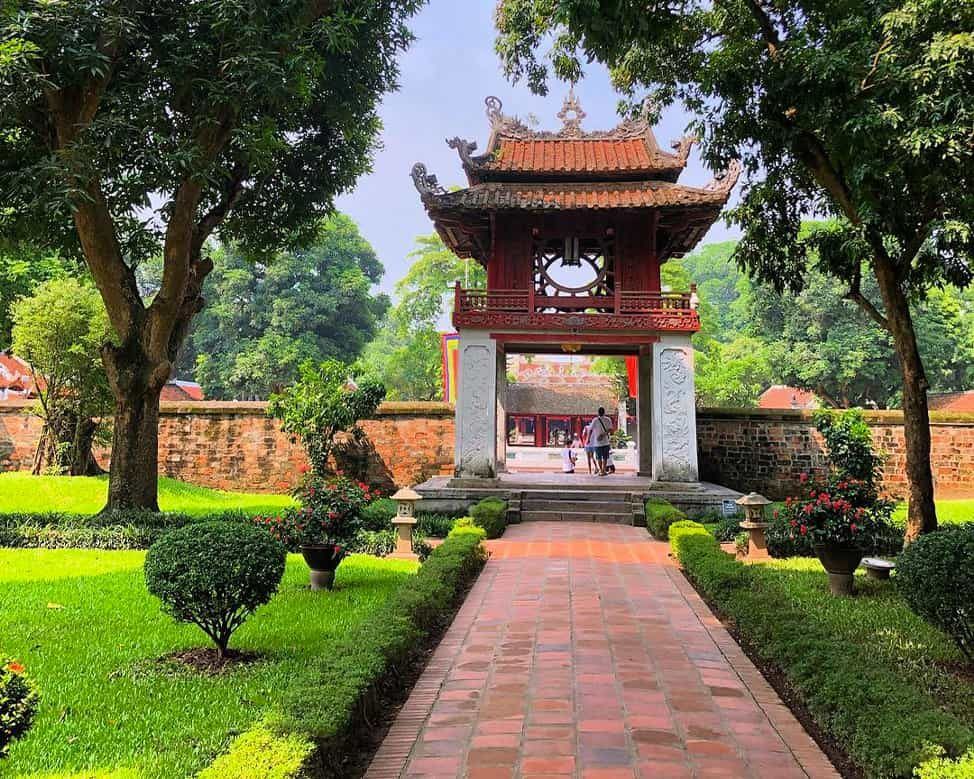
Khue Van Cac - the most prominent structure, considered a symbol of Hanoi (Photo: Internet)
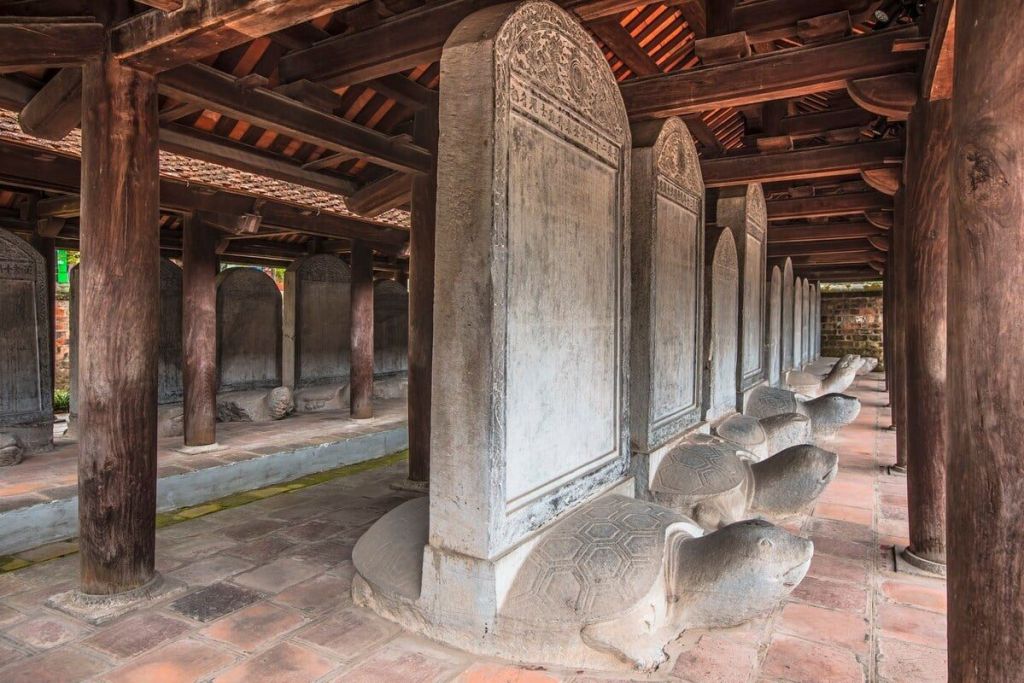
3.3.3. Doctor's Stone SteleThe Temple of Literature currently has 82 Doctor's stone steles, recording the names of 1,304 doctors from the Lê – Mạc examination periods (1442–1779). In 2011, this system of stone steles was recognized by UNESCO as a World Documentary Heritage, affirming its great historical and educational value.
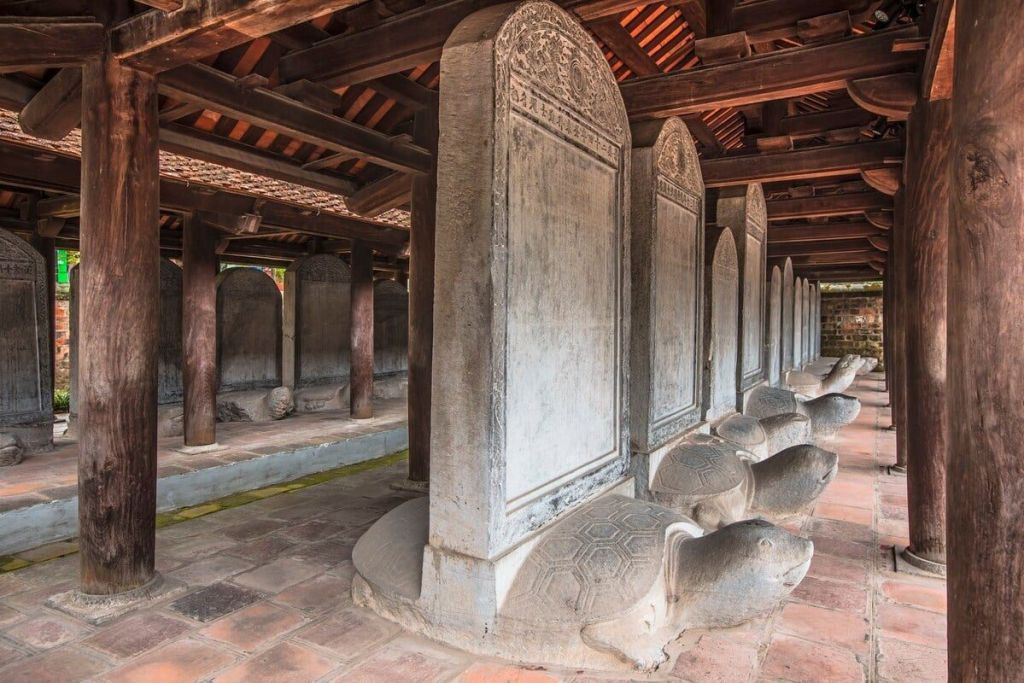
82 Doctor's stone steles, recording the names of 1,304 doctors from the Lê – Mạc examination periods (Photo: Internet)
3.3.4. Heavenly Well
Located in the middle of the Doctor's steles area, the Heavenly Well is square-shaped, symbolizing the earth, combined with the round door of Khue Van Cac symbolizing the sky. This space carries the meaning of gathering the essence of heaven and earth, honoring the national Confucian education center.
3.3.5. Thai Hoc Area and Thunder Drum
The Thai Hoc Area has been restored on the old foundation of the former Quoc Tu Giam, serving as a venue for important cultural and educational activities. Here, the Thunder Drum – the largest drum in Vietnam (since 2000), symbolizes the national spirit, community strength, and long-standing cultural tradition.
3.3.6. Experience the night tour of the Temple of Literature – Quoc Tu Giam
Currently, the relic organizes night tours on Wednesday, Friday, Saturday, and Sunday evenings. Visitors can explore the Temple of Literature in a mystical atmosphere with 3D mapping technology performances, providing a fresh and vivid perspective on a thousand years of history.
Conclusion
With a history spanning over 1,000 years, the Temple of Literature – Quoc Tu Giam is not only a symbol of Vietnamese education but also an unmissable destination when traveling to Hanoi. A visit here will help you gain a deeper understanding of the tradition of learning, the spirit of honoring knowledge, and the sustainable cultural values of the nation.
------------------------
Source: Compilation
Bình Luận:
0