






Binh Trung Pagoda: A Century Of Intersection Between Champa Stone Ruins And Vietnamese Spirit
Binh Trung Pagoda: The Centuries-Old Convergence Between Champa Stone Ruins and Vietnamese Soul
Quietly located by National Route 1A in Gio Linh Commune (Quang Tri), Binh Trung Pagoda is not only a 300-year-old ancient temple but also a "living stone history book." Few would guess that beneath the moss-covered roofs today lies the foundation of an ancient Champa stone pagoda, a place that preserves cultural remnants spanning many centuries.
1. "Predecessor" Bao Dong: The Legendary Stone Pagoda
- Before being named Binh Trung, this place was once Bao Dong Pagoda – a stone architectural work of the Cham people.
- Time marker: Although there is no exact number (some hypotheses suggest the 2nd or 5th century), it is certain that Bao Dong existed long before Princess Huyen Tran married into the Cham land in 1306.
- Stone relics: Currently, in the pagoda's grounds, there are still enormous green stone slabs, which were the pillars and walls of the ancient pagoda. Notably, the intricately carved patterns and ancient Cham characters on the stone continue to defy the ravages of time, becoming invaluable resources for archaeology.

Photo A stone block intricately carved with patterns
2. The Figure Tran Dinh An and the Continuation of the Vietnamese Flow
- In 1703, after dedicating his life through four Nguyen lords, the notable figure Tran Dinh An (from Ha Trung village) chose his hometown as a place to enjoy his old age.
- He renovated the pagoda on the old foundation of Bao Dong Pagoda and renamed it Binh Trung Pagoda.
- The "Four Great Officials" stele: A precious treasure at the pagoda is the stele granted by Lord Nguyen Phuc Chu to Tran Dinh An. The poem and preface on the stele not only praise the merits of the great official through four lords but also serve as evidence of the special favor of the dynasty towards the outstanding son of Gio Linh land.
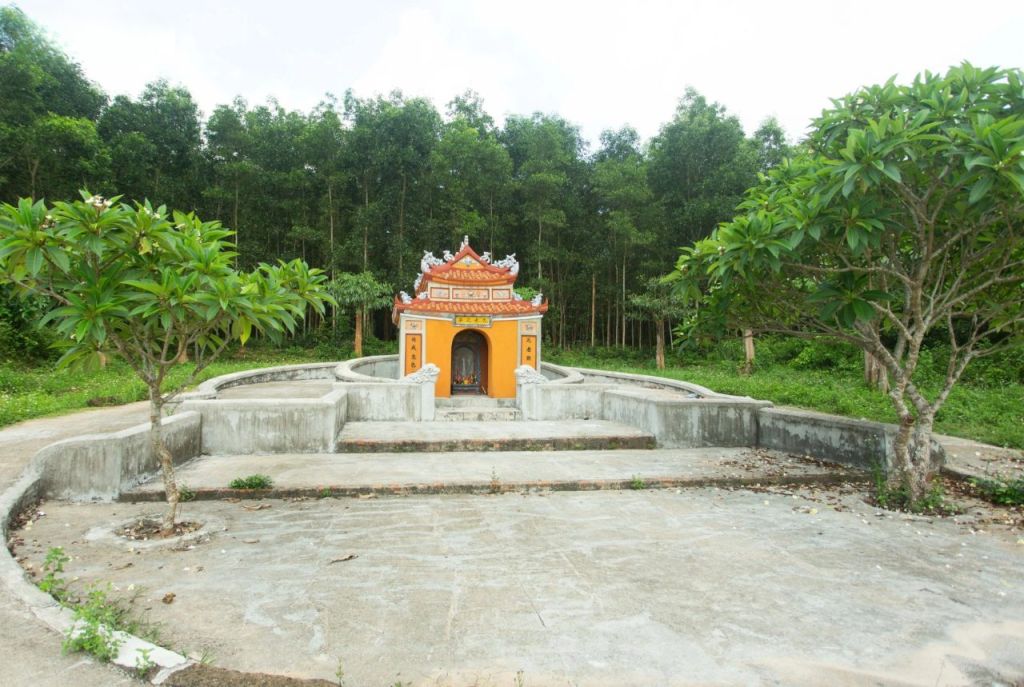
Photo The tomb of Tran Dinh An recently restored by authorities and descendants of the Tran Dinh family
3. The Maternal Hometown of Zen Master Thich Nhat Hanh and the Revival
- Binh Trung Pagoda also has a special connection as it is the maternal hometown of the late Zen Master Thich Nhat Hanh.
- After the ups and downs of the war that severely damaged the pagoda, in 1996, Zen Master Thich Nhat Hanh himself initiated the rebuilding of the new pagoda on the old foundation, creating the appearance we see today.
- The presence of the Zen Master serves as a spiritual connection, making the pagoda an important spiritual anchor for the people of Ha Trung village.
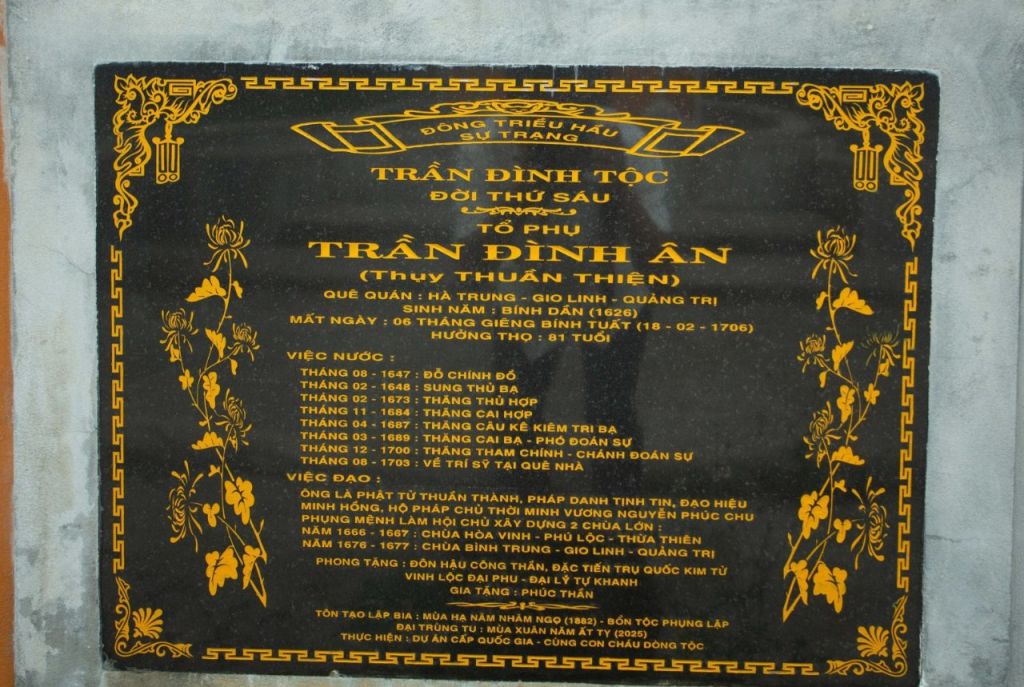
Photo The stele clearly recording the contributions of the notable figure Tran Dinh An
4. National Heritage Site: Binh Trung Pagoda and Long Tomb
- In 1991, the pagoda and the tomb of Tran Dinh An were classified as a National Heritage Site.
- Long Tomb: About 2 km from the pagoda is the resting place of the notable figure Tran Dinh An. The tomb features unique architecture with two levels (hence called Long Tomb), including a complete system of tomb gates, screens, worship halls, and a grave house, exuding the majesty of a prominent official.
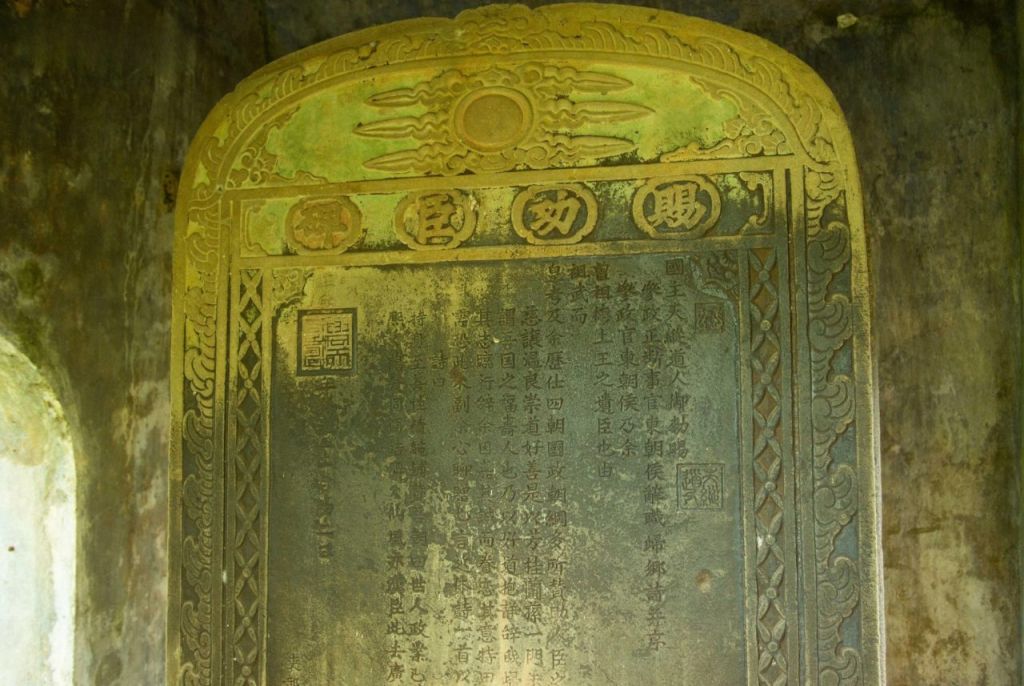
Photo The stele engraved with the poem and preface granted by Lord Nguyen Phuc Chu to the notable figure Tran Dinh An
Visiting Binh Trung Pagoda, tourists not only come to worship Buddha but also to touch the cold Cham stone slabs, feeling the continuity of historical layers. In the tranquil space, the sound of the temple bell resonates like connecting the prayers of the ancients with the hopes for peace of the present.
----------
Source: Ba Cuong
Bình Luận:
0