





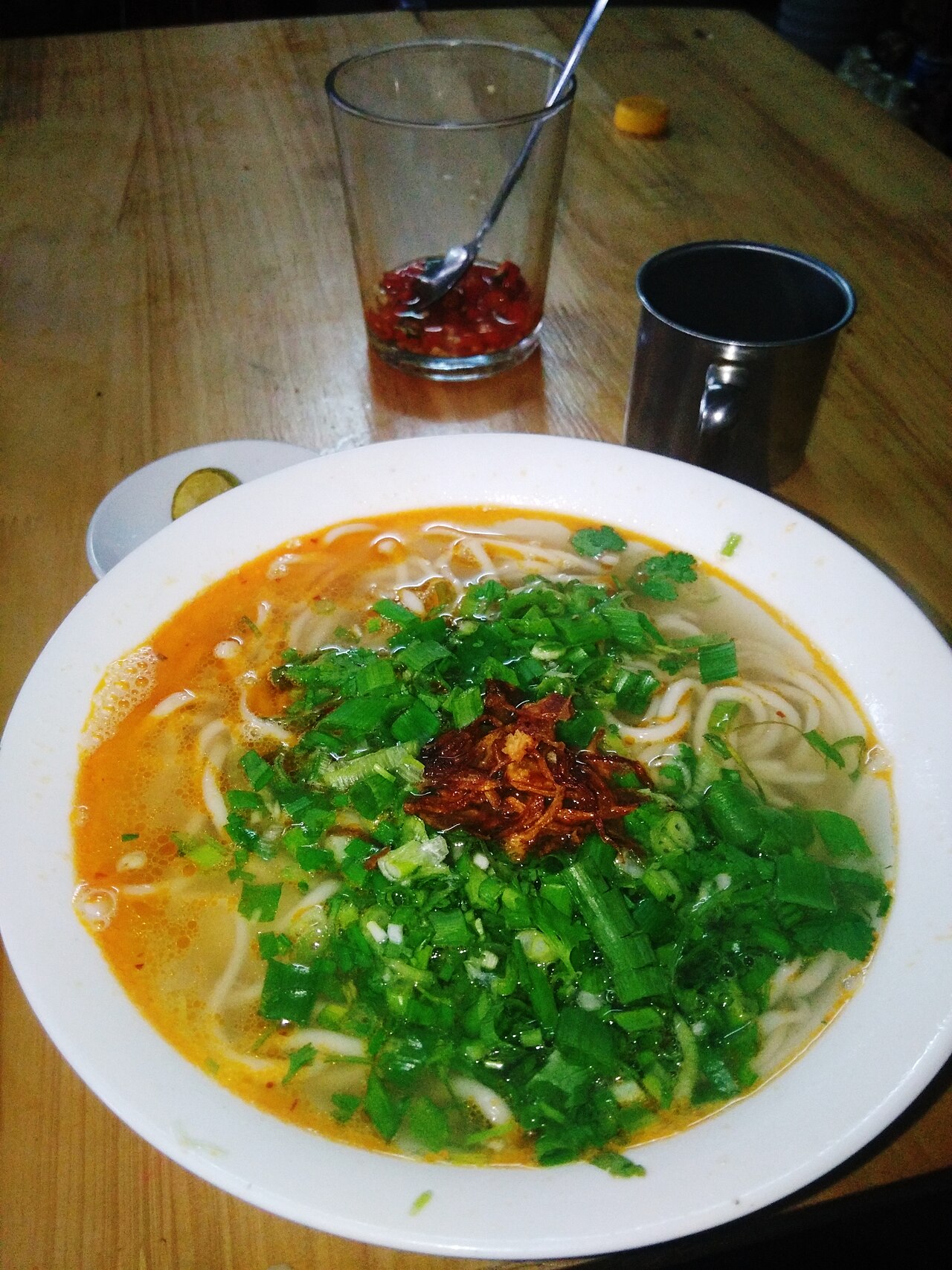
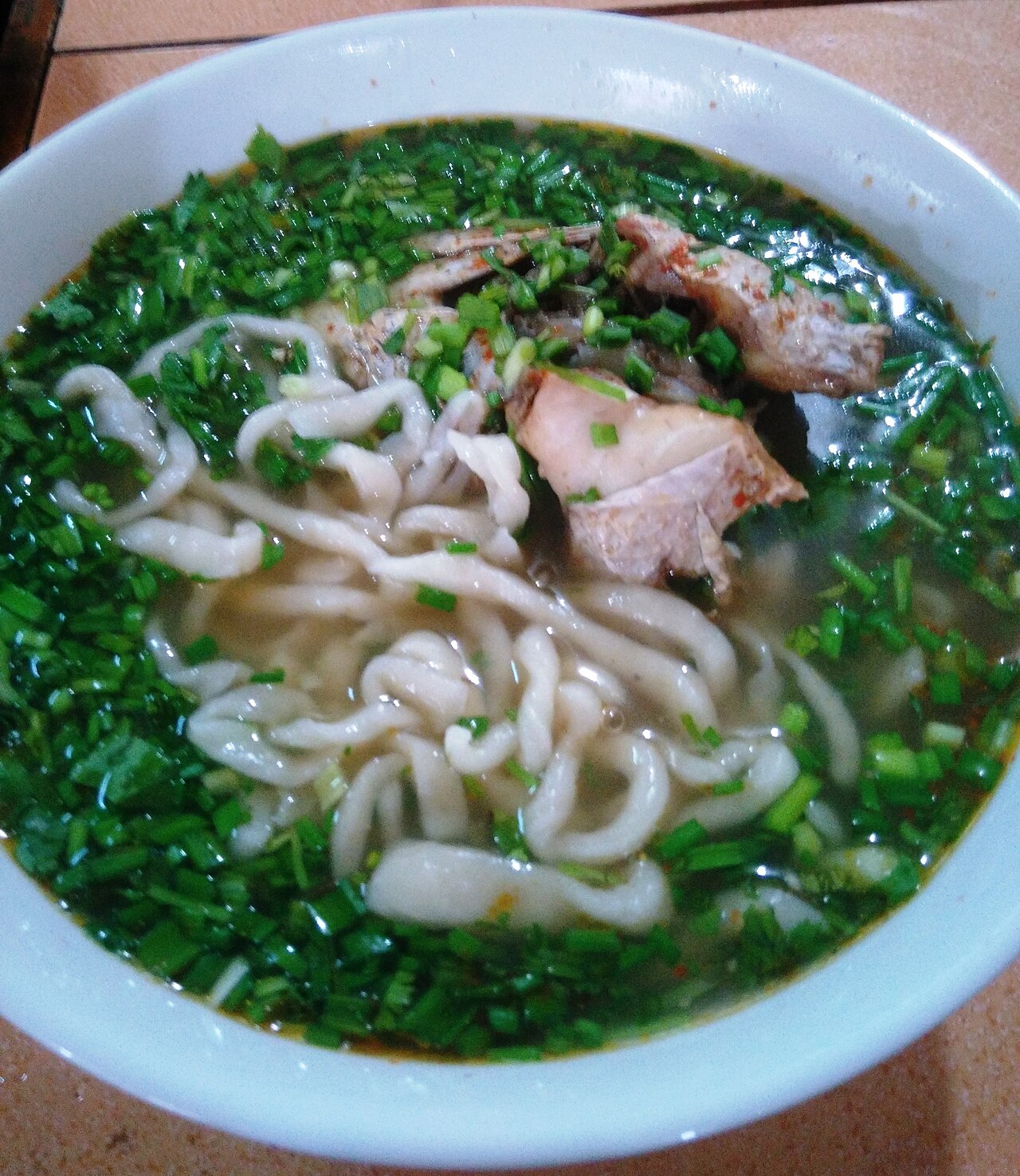
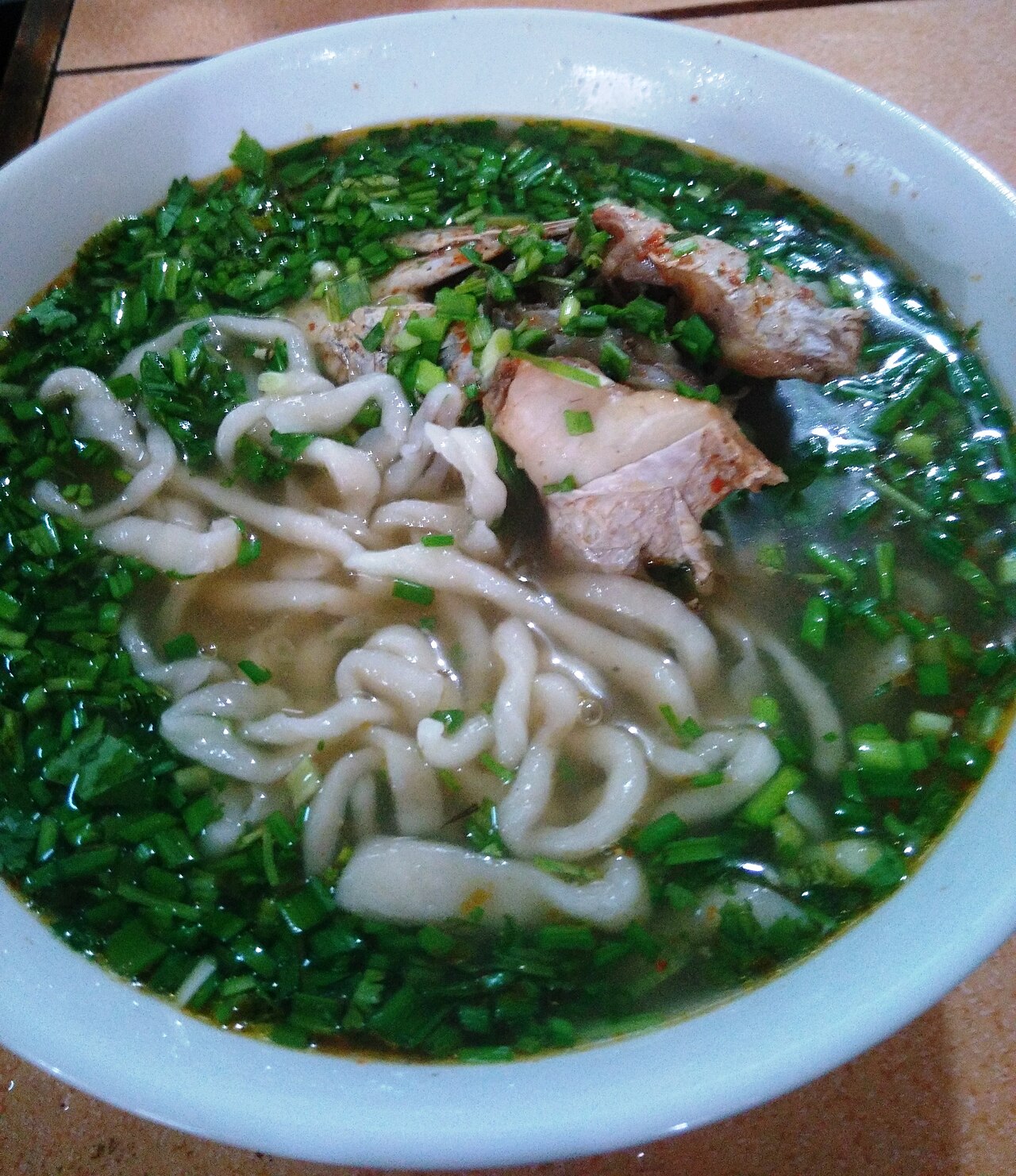
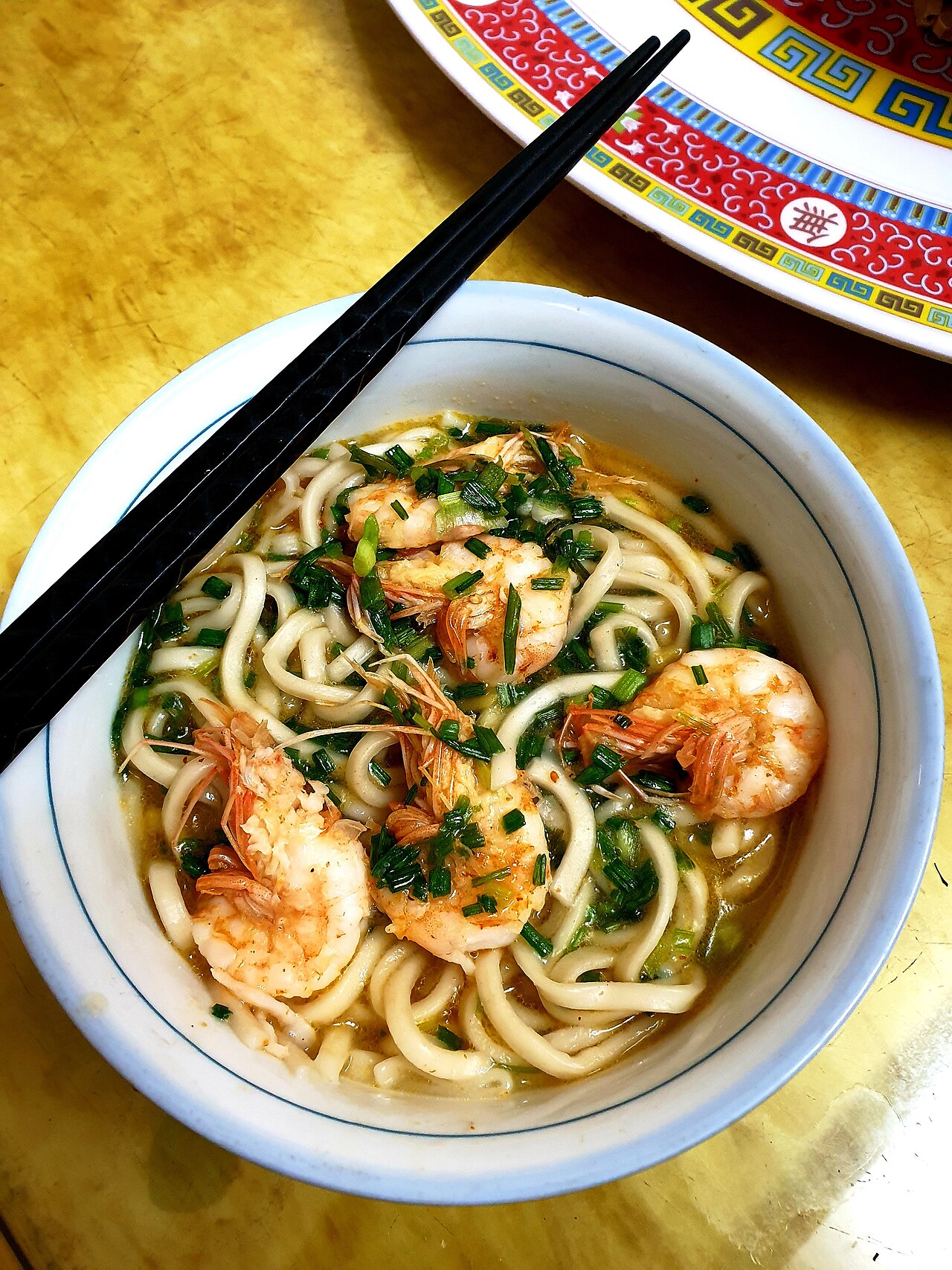
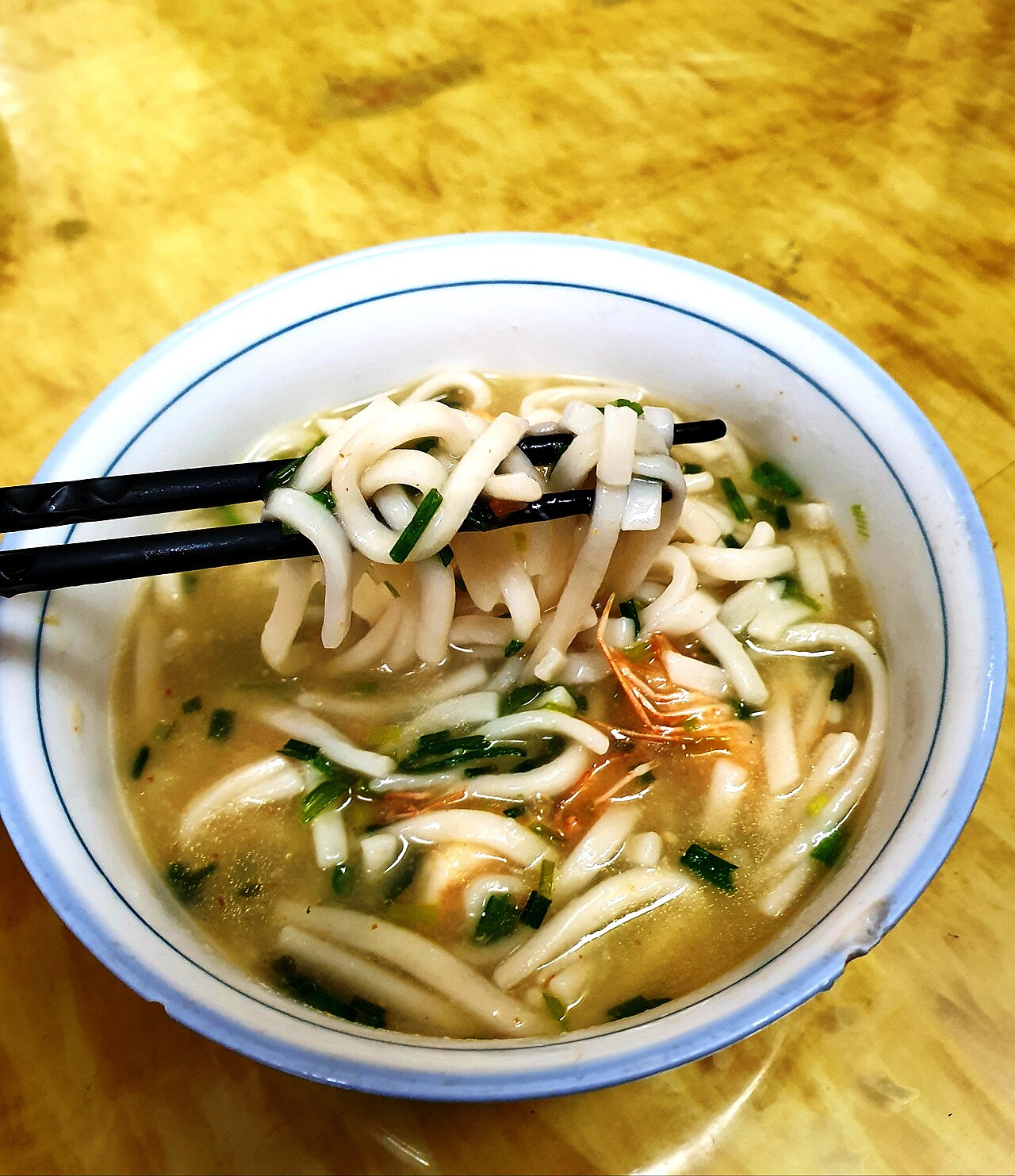
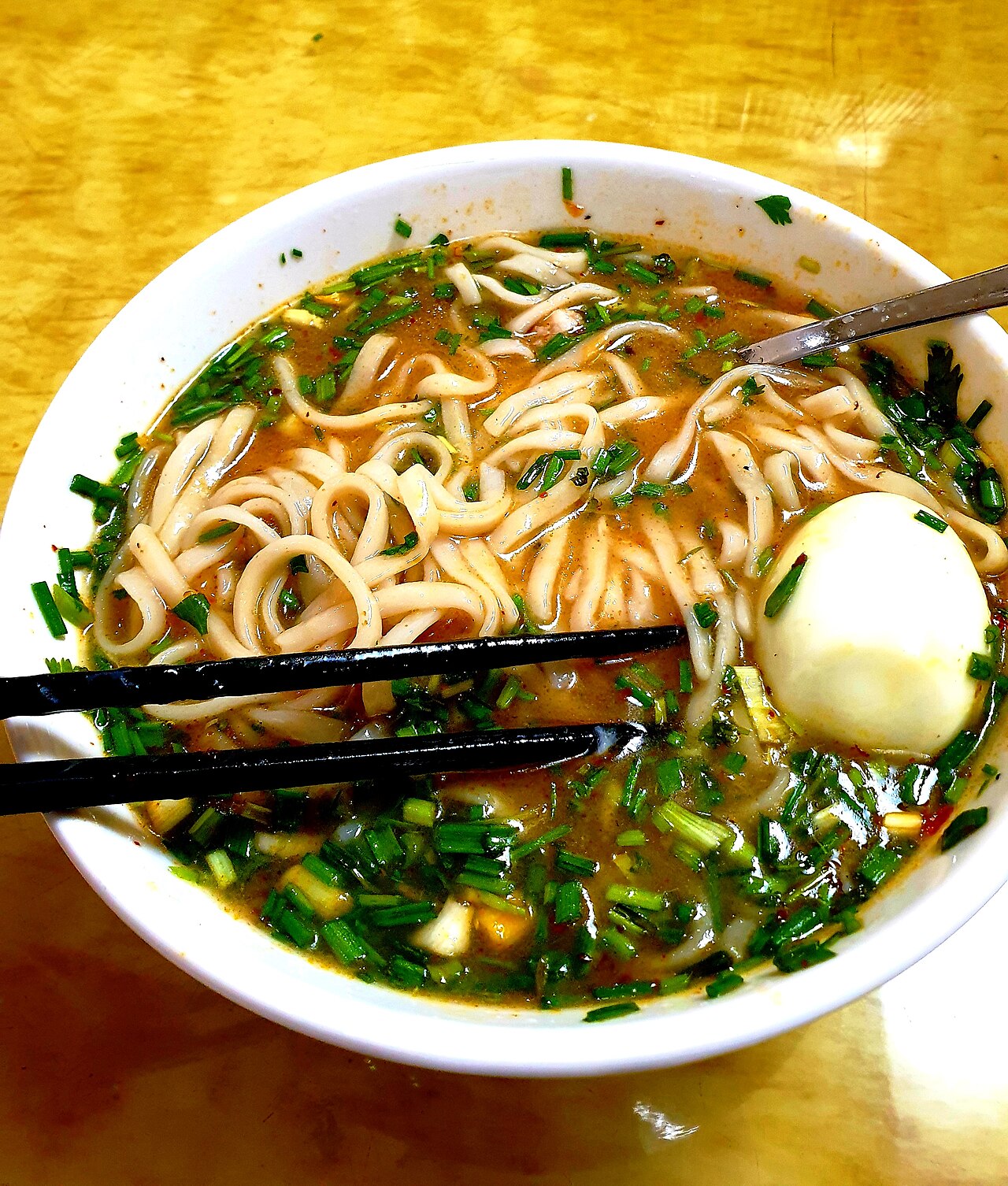
क्वांग त्रि के लोग इसे बánh canh नहीं कहते, बल्कि इसे cháo bột कहते हैं — यह Đông Hà, Triệu Phong, Hải Lăng में सबसे लोकप्रिय नाश्ता है। यह नूडल्स गेहूं के आटे (कुछ जगह चावल के आटे का मिश्रण) से बनाए जाते हैं, पतला बेलकर बड़े टुकड़ों में काटा जाता है, जो "बिस्तर का किनारा" जैसा दिखता है, च chewy, और नई धान की खुशबू से भरा होता है।
मैं Đông Hà के फुंग 1 में एक छोटे से दुकान पर गया, जब सुबह का उजाला अभी हल्का था। एक बड़ा बर्तन भाप छोड़ रहा था, दुकान की मालकिन तेजी से हर कटोरे में आटा उबाल रही थी, गर्म शोरबा डाल रही थी, और उसमें कुछ तले हुए मछली के टुकड़े डाल रही थी, जिन पर हल्दी का रंग चढ़ा हुआ था, हरा प्याज, काली मिर्च, और क्वांग त्रि की विशेषता वाली लाल मिर्च छिड़क रही थी। यहाँ झींगा केक नहीं है, रक्त नहीं है — केवल जंगली मछली और शोरबा है, लेकिन यह यादगार है।
क्वांग त्रि का cháo bột बनाने का तरीका ह्यू के bánh canh या दक्षिणी क्षेत्र के bánh canh से अलग है, यह ताजा लाल मिर्च (नमक के साथ भुनी हुई, मोटे पीसी हुई) और सलाद के साथ परोसा जाता है: सलाद, अंकुर, तुलसी, कच्चे केले। हर कटोरा केवल लगभग 25,000 – 35,000đ है, जो सुबह के लिए पर्याप्त है। कुछ जगहों पर ताजे जंगली मछली भी जोड़ी जाती है, जो मीठी और बहुत कम मछली की गंध वाली होती है।
Đông Hà के लोगों के लिए परिचित स्थान: ट्रần हưng đạo सड़क पर O Hằng की दुकान, फुंग 1 में Mẹ Thảo की दुकान, या Đông Hà बाजार के पास Quốc lộ 9 सड़क पर bánh canh की गाड़ियाँ। दुकान सुबह 5 बजे खुलती है, सुबह 6 से 8 बजे तक सबसे अधिक भीड़ होती है; इसलिए जल्दी जाएँ ताकि दिन की शुरुआत में शोरबा का बर्तन मिल सके।
सुबह की ठंडी हवा में Đông Hà का cháo bột खाते हुए, मैं समझ गया कि क्यों क्वांग त्रि के लोग दूर जाकर भी इसके बारे में चमकती आँखों के साथ बताते हैं। यह केवल एक भोजन नहीं है — यह एक क्षेत्र का अपने प्रियजनों का स्वागत करने का तरीका है।
सामग्री AI द्वारा संकलित की गई है।

टिप्पणी
0