






Things To Note When Visiting Hang Thẳm Phầy – Essential Tips To Know Before Exploring.
Tham Phầy Cave is one of the relatively pristine destinations in the Ba Bể area, suitable for travelers who enjoy exploring caves, trekking, and experiencing adventurous nature. Unlike popular attractions such as Ba Bể Lake, Puông Cave, or Hua Mạ Cave, Tham Phầy Cave is not yet a mass tourism spot, the path to the cave has many challenges, and the interior space is quite dark, damp, with underground rivers, slippery rocks, and complex terrain.
Therefore, to ensure a safe and complete trip, travelers need to prepare well regarding health, clothing, equipment, itinerary, and follow the guidance of local people. Below are important notes before exploring Tham Phầy Cave.
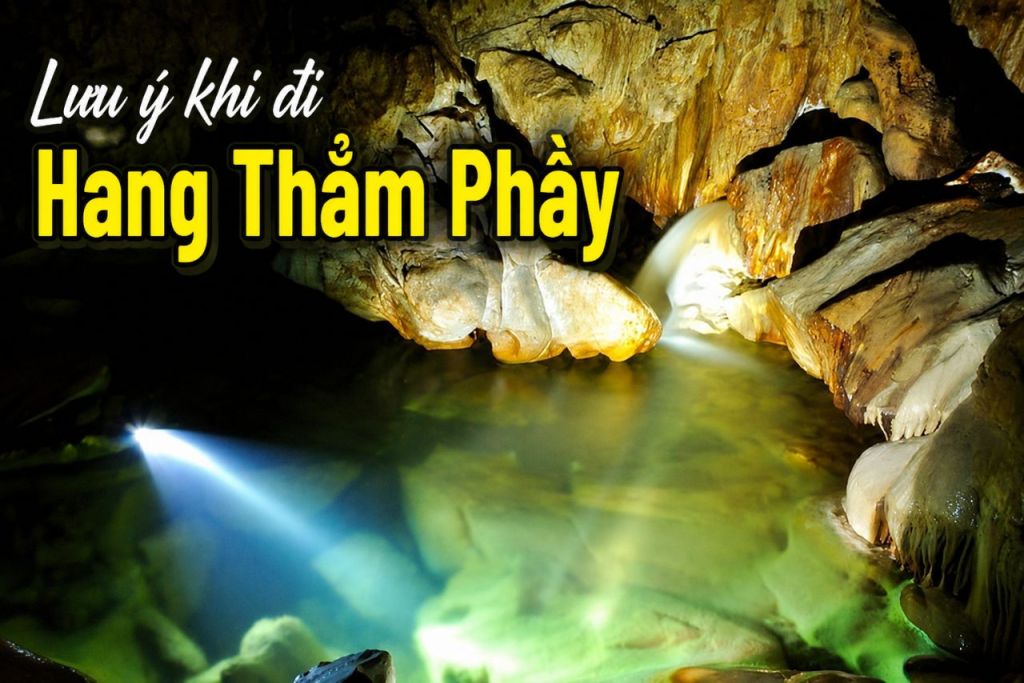
1. Do not go to Tham Phầy Cave alone
Tham Phầy Cave is not like the caves that have been popularized for tourism, with clear paths, lighting systems, and full signboards. This cave is still quite pristine, and the way in may require passing through forests, streams, slippery rocks, or hard-to-identify trails.
Therefore, travelers should not go alone or in spontaneous groups if they lack experience. It is best to go with local people, local guides, or tour organizations that understand the terrain of the area. The guide will help you choose a suitable route, avoid dangerous areas, and handle situations better if they arise.
2. Check the weather before the trip
One of the most important factors when exploring Tham Phầy Cave is the weather. Since there are underground rivers in the cave and the way in may pass through streams, if it rains heavily, the water can rise quickly, making the path slippery and travel more dangerous.
Travelers should prioritize going on dry weather days, avoiding heavy rains, prolonged rain, or times with flood or landslide warnings. If it rains heavily before the departure day, you should ask local people or the tour guide whether to continue with the itinerary.
Do not insist on going just because you have planned it beforehand. With pristine destinations like Tham Phầy Cave, safety should always come first.
3. Prepare good health before going
The journey to explore Tham Phầy Cave may include trekking through forests, crossing rocky terrain, streams, damp ground, and sections in the cave that lack light. Therefore, this trip is more suitable for those with stable health, accustomed to physical activity, and not afraid to move on natural terrain.
If you have issues with joints, cardiovascular problems, blood pressure, asthma, fear of the dark, or are not used to hiking, you should consider carefully before participating. If traveling with children or the elderly, choose easier attractions like Ba Bể Lake, Puông Cave, Hua Mạ Cave, An Mạ Temple, or Đầu Đẳng Waterfall.
Before the trip, you should get enough sleep, eat lightly, avoid alcohol, and prepare mentally for an exploratory journey that is not too comfortable.
4. Wear light, easy-to-move clothing
Clothing when going to Tham Phầy Cave should prioritize comfort and safety. You should wear long pants, long-sleeved shirts or light jackets to limit insect bites, scratches from forest plants, or collisions with rocks in the cave.
Do not wear skirts, very short pants, tight clothing, or overly thick clothing that hinders movement. Since it is usually more humid and cooler inside the cave than outside, you may want to bring an additional light windbreaker if you are prone to feeling cold.
The color of the clothing should be bright or moderately noticeable for easy identification within the group, especially when walking in the forest or in dimly lit areas.
5. Choose shoes with good grip
Shoes are a very important factor when exploring caves. The path to Tham Phầy Cave may have damp soil, slippery rocks, moss, streams, or steep sections. Therefore, you should choose sports shoes, trekking shoes, or climbing shoes with good grip.
Do not wear flip-flops, high heels, slippery sandals, or new shoes that you are not accustomed to. If you wear new shoes, you are very likely to experience foot pain, blisters, or slips when moving on difficult terrain.
Additionally, you should bring an extra pair of socks because shoes/socks may get wet when crossing streams or on damp cave floors.
6. Bring a flashlight or headlamp
Inside Tham Phầy Cave, there is no complete tourist lighting system like in popular caves. The space inside the cave has many dark sections, and natural light is not sufficient to clearly see the path.
Travelers should prepare personal flashlights or headlamps. Headlamps are more convenient as they free your hands while moving, climbing rocks, or carrying items. Additionally, bring extra batteries or fully charge devices before going.
Do not rely solely on your phone's flashlight, as phones run out of battery quickly and the light is not strong enough in deep cave environments.
7. Prepare a waterproof bag for your phone and electronics
When going to Tham Phầy Cave, you may encounter stream water, humidity, mud, or dripping water from the cave ceiling. Therefore, phones, cameras, power banks, and important documents should be kept in waterproof bags.
If you want to take photos inside the cave, you need to be particularly careful as the rocky ground may be slippery, the light is weak, and being focused on taking photos can easily distract you while moving. It is advisable to stop at a safe spot before taking photos, avoiding using your phone while walking.
8. Bring water and snacks
The journey into Tham Phầy Cave can take quite a long time depending on the route and itinerary. Travelers should bring personal drinking water, snacks such as energy bars, chocolate, dried food, dried fruits, or candy to replenish energy when needed.
However, do not bring too much stuff that makes your backpack heavy and difficult to move. Prioritize light, easy-to-eat, easy-to-store items that do not create much waste.
After eating, collect all trash to take out, absolutely do not leave wrappers, plastic bottles, or leftover food in the cave and forest area.
9. Prepare basic medicine and medical supplies
When visiting pristine areas, you should prepare a small medical kit including: adhesive bandages, antiseptics, stomachache medicine, cold medicine, headache medicine, allergy medicine, menthol oil, insect repellent, and some basic first aid supplies.
If you have personal health issues or need to take specific medications, bring enough and inform your companions or the guide in advance to assist when needed.
Especially, mountainous areas may have mosquitoes, leeches, or insects, so insect repellent is a very necessary item.
10. Do not separate from the group
During the exploration of Tham Phầy Cave, absolutely do not go alone, separate from the group, or turn into cave branches without guidance. Inside the cave, there may be many forks, dark areas, slippery rocky floors, or deep water levels. If you get lost, finding your way out will be very difficult and dangerous.
Travelers should walk in a line, keep a reasonable distance from the person in front, always observe the guide, and immediately inform if feeling tired, dizzy, cold, leg pain, or having health issues.
11. Be careful with slippery rocks, underground water, and dark areas
Tham Phầy Cave has natural terrain, so not every section is flat. Some areas may have sharp rocks, slippery stones, damp mud, flowing water, or uneven cave floors. When moving, walk slowly, place your feet firmly, and avoid running or playing around.
If you have to cross streams or water areas, carefully observe the depth and listen to the guide's instructions. Do not wade into deep water, strong currents, or places where the bottom is not visible.
In dark caves, do not shine lights directly into other people's eyes and do not turn off the lights suddenly to tease, as it may cause panic or disorientation.
12. Do not touch, break, or damage stalactites
Stalactites and stalagmites in the cave have formed over thousands, millions of years. Just one action of touching, breaking, writing, or dirtying the rock surface can affect the natural development process of the cave.
Travelers should keep a distance when observing, do not break stalactites, do not carve letters on rocks, do not take rocks, stalactites, or any items from the cave. This is an important principle to protect the pristine beauty of Tham Phầy Cave.
13. Do not litter in the cave and on the trekking path
Since Tham Phầy Cave is still pristine, preserving the environment is even more important. Travelers should bring a small bag to hold personal trash such as wrappers, water bottles, tissues, plastic bags, broken batteries, or masks.
The simple principle is: take in what you bring out. Do not leave trash in the cave, by the stream, in the forest, or at resting areas. Keeping clean not only protects the landscape but also helps the destination develop sustainable tourism in the future.
14. Minimize loud noise
The space inside the cave often amplifies sound very strongly. If you talk too loudly, shout, or play loud music, the sound will be amplified, affecting the experience of the whole group and potentially impacting wildlife living in the cave, such as bats.
When visiting, speak at a reasonable volume, maintain respect for nature and the cave space. This is also a way for you to better appreciate natural sounds like flowing water, wind, and the characteristic echo of the cave.
15. Note when taking photos in the cave
Tham Phầy Cave has many beautiful photo angles, especially the stone arches, rays of light, underground streams, stalactites, and deep dark spaces. However, the lighting conditions in the cave are quite challenging, so you need to prepare suitable equipment if you want to take beautiful photos.
Prioritize taking photos in safe positions with relatively stable ground. Do not climb high rocks, do not stand too close to deep water, and do not take risks to get a photo angle. If using a tripod or additional light, ensure it does not obstruct the passage for others.
16. Do not enter the cave when it is getting dark
Since the path to Tham Phầy Cave may go through forests, streams, or trails, travelers should start their journey in the morning or early afternoon to have enough time to move. Do not enter the cave too late or when it is getting dark, as returning may lack light, making it difficult to navigate and easy to lose direction.
It is best to calculate the time for going and returning with the guide, having backup plans if the weather changes or the group moves slower than expected.
17. Respect local people and local culture
Tham Phầy Cave is located within the living space of the local community in the Ba Bể region. When passing through villages, fields, or areas where people live, travelers should maintain polite attitudes, do not enter houses without permission, do not pick crops, and do not take photos of people without asking.
If hiring a guide, using food and accommodation services, or seeking support from local people, clarify prices, itineraries, and requests before the trip. Respect and clarity will enhance the experience for both parties.
18. It is advisable to go in small or organized groups
Tham Phầy Cave is suitable for small groups with good health and a spirit of exploration. If the group is too large, moving in the cave can be difficult to control, easily causing congestion in narrow sections and impacting the natural environment.
If traveling in a large group, it is advisable to divide into smaller groups, with a guide responsible for each group and establish safety regulations from the start. Each group should have at least one person knowledgeable in basic first aid or experienced in trekking/caving.
19. Prepare mentally for a primitive experience
Before going to Tham Phầy Cave, travelers need to understand that this is not a comfortable tourist destination. There may not be toilets, water stalls, stable phone signals, paved paths, or lighting like popular attractions.
In return, you will experience a natural, pristine space that is somewhat challenging. Therefore, be mentally prepared to be flexible and ready to adapt to actual conditions.
20. Suggested items to bring when going to Tham Phầy Cave
Travelers can prepare the following items:
Clothing: long pants, long-sleeved shirts, light jackets, spare socks.
Shoes: trekking shoes or non-slip sports shoes.
Equipment: flashlight/headlamp, spare batteries, power bank, waterproof bag.
Personal items: drinking water, snacks, tissues, dry towels, insect repellent.
Medical: adhesive bandages, stomachache medicine, cold medicine, allergy medicine, menthol oil.
Others: trash bag, thin gloves if needed for climbing, hat or cap when trekking outdoors.
Bình Luận:
0