






Pac Ngoi Village – A Peaceful Village By Ba Be Lake
Nestled by the clear blue waters of Ba Bể Lake, Pác Ngòi Village is one of the most prominent community tourism destinations when mentioning the Ba Bể region. Not noisy or bustling, this place leaves a lasting impression with its peaceful scenery, traditional stilt houses, the simple life of the Tày people, and the picturesque beauty of the northeastern mountainous region.
If Ba Bể Lake is the natural symbol of this land, then Pác Ngòi Village can be seen as a stopover that helps visitors better feel the "soul" of Ba Bể's culture. Here, visitors can not only enjoy the scenery but also stay in stilt houses, taste local dishes, listen to then singing, learn about customs, and enjoy the slow pace of life by the lake. Pác Ngòi is a lakeside village of Ba Bể, preserving many cultural features of the Tày people with ancient stilt houses leaning against the mountains, overlooking the clear lake.

1. Address of Pác Ngòi Village
Pác Ngòi Village belongs to Nam Mẫu Commune, Ba Bể, Bắc Kạn Province; currently located in the Ba Bể Lake tourism area. The village is situated in the core area of Ba Bể National Park, very close to Ba Bể Lake, surrounded by rocky mountains, forests, gardens, and clear blue waters.
The location of Pác Ngòi is very beautiful: backed by mountains, facing the lake. This terrain creates a landscape that is both poetic and peaceful, especially beautiful in the early morning when mist lingers over the lake, or in the late afternoon when the sunlight gently descends on the stilt houses.
2. Getting to Pác Ngòi Village
From Hanoi, visitors can travel to Ba Bể by bus, limousine, personal car, or motorbike. The journey to the Ba Bể area usually takes about 5–6 hours depending on the means of transport and traffic conditions.
After arriving in the Ba Bể Lake area, visitors continue to Pác Ngòi Village. If traveling by private vehicle, you can drive straight to the village area following directions or asking local people. If taking a bus, you should get off near Ba Bể and then hire a motorbike taxi, taxi, or contact a homestay for assistance in getting to the village.
Pác Ngòi is a quite convenient accommodation point for exploring Ba Bể. From the village, visitors can easily rent a boat to visit famous spots on the lake such as Bà Góa Island, An Mạ Temple, Tiên Pond, Puông Cave, and Đầu Đẳng Waterfall.
3. Characteristics of Pác Ngòi Village
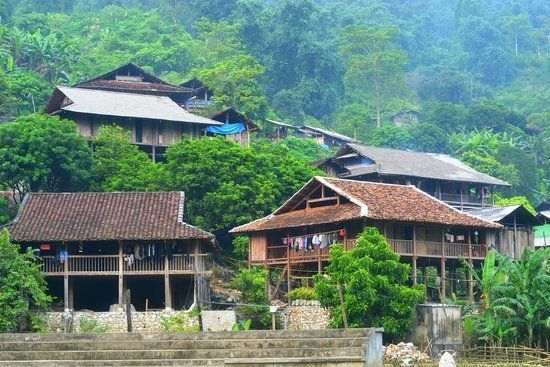
The most distinctive feature of Pác Ngòi Village is the Tày cultural space that is still well-preserved. The village has many traditional stilt houses, some of which are quite old, built according to the typical architecture of the Tày people. According to many travel documents, Pác Ngòi is a village of the Tày people with nearly 100 stilt houses, some of which have existed for decades to over a hundred years.
The stilt houses in Pác Ngòi often lean against the mountains, with the front opening up to the lake, gardens, and small village roads. The architecture of the stilt houses not only creates a unique beauty for the village but also reflects the lifestyle closely connected to nature of the local people.
In addition to the architecture, Pác Ngòi is also attractive due to its simple daily life. The villagers are mainly Tày people, known for their gentle and hospitable nature. Besides farming, animal husbandry, and traditional handicrafts, many households have developed homestay models, contributing to making Pác Ngòi a familiar community tourism destination in Ba Bể.
4. Experiences when visiting Pác Ngòi Village
4.1. Staying in a stilt house homestay
One of the most worthwhile experiences when visiting Pác Ngòi is staying in traditional stilt houses. The accommodation here is not too luxurious, but it provides a cozy and intimate feeling, very much in line with community tourism.
In the morning, you can wake up to the sound of birds, admire the peaceful village, and enjoy the fresh air. In the evening, the group can gather around a local meal, listen to the locals tell stories about Ba Bể Lake, Tày culture, and life in the small village.
4.2. Walking to admire the village
Pác Ngòi is very suitable for leisurely walking. The small paths in the village, the stilt houses, gardens, rice fields, corn fields, and the distant lake scenery create a very unique sense of peace.
This is a type of experience that does not require too many activities, just a stroll, enjoying the scenery, chatting with local people, and feeling the slow pace of life in the mountainous region.
4.3. Learning about Tày culture
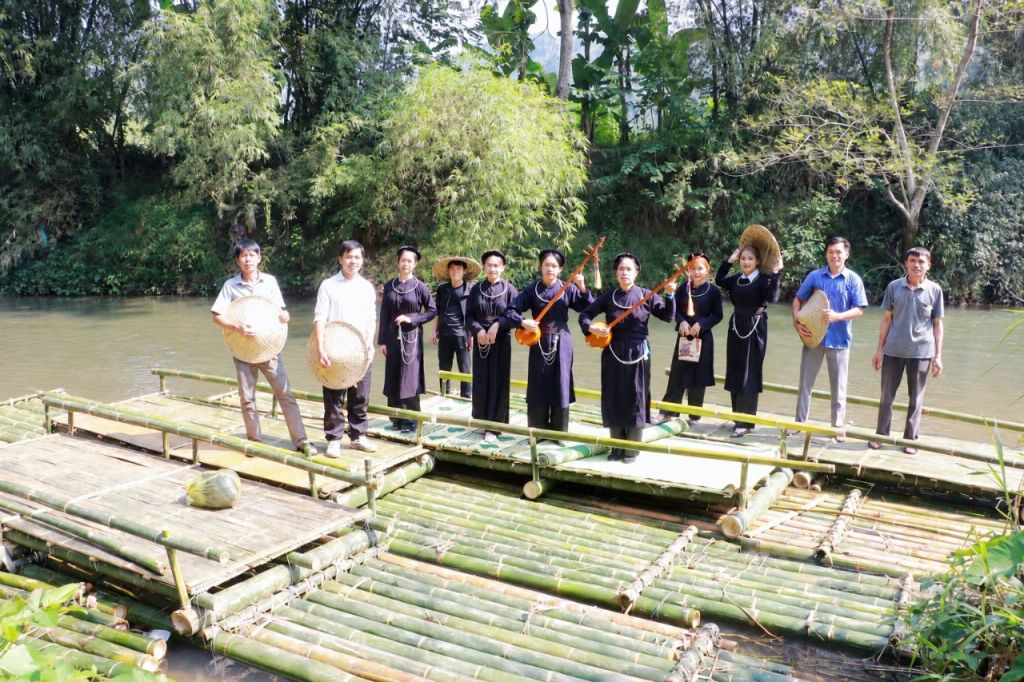
When visiting Pác Ngòi, visitors can learn about the distinctive cultural features of the Tày people through the architecture of stilt houses, cuisine, clothing, handicrafts, and folk songs. Many groups of visitors also get to enjoy then singing and đàn tính – forms of folk performance that are deeply imbued with the identity of the Tày people.
4.4. Enjoying local specialties
Cuisine is an indispensable part when visiting Pác Ngòi Village. Visitors can enjoy local specialties from the Ba Bể region such as grilled fish from Ba Bể Lake, sour shrimp, wild bamboo shoots, sticky rice, local pork, hill chicken, wild vegetables, and corn wine.
The dishes here are often prepared simply, preserving the natural flavors of local ingredients. Especially, the meal at the stilt house brings a feeling of closeness, as if dining in a local family rather than in a tourist restaurant.
4.5. Renting a boat to explore Ba Bể Lake
From Pác Ngòi Village, visitors can easily rent a boat to explore Ba Bể Lake. This is a great advantage of the village as it offers convenient accommodation and proximity to prominent tourist routes.
A popular itinerary is to take a boat from the village area, visiting Bà Góa Island, An Mạ Temple, Tiên Pond, Puông Cave, and Đầu Đẳng Waterfall. After the journey on the lake, visitors return to Pác Ngòi to rest, have dinner, and enjoy the peaceful atmosphere at night.
5. The best time to visit Pác Ngòi Village
Pác Ngòi Village can be visited year-round, but it is usually most beautiful in spring, summer, and early autumn. Spring has a gentle atmosphere, with lush greenery; summer is suitable for escaping the heat, boating, and experiencing Ba Bể Lake; while autumn brings a fresh, peaceful feeling, perfect for relaxation.
If you want to take beautiful photos, you should wake up early to admire the village in the thin mist or take a stroll in the late afternoon when the sunlight is softer. These are two times that easily yield photos capturing the peaceful spirit of Pác Ngòi.
6. Suggested itinerary for visiting Pác Ngòi Village
For a 2-day, 1-night trip, you can arrange the itinerary as follows:
Day 1: Travel to Ba Bể, check into a homestay at Pác Ngòi, rest, walk around the village, admire the lake, have dinner at the stilt house, and engage in cultural exchanges if there is a program.
Day 2: Rent a boat to explore Ba Bể Lake, visit Bà Góa Island, An Mạ Temple, Tiên Pond, Puông Cave, and Đầu Đẳng Waterfall. After that, return to the village for lunch, rest, and then head back.
This itinerary is suitable for groups of friends, families, or travelers who want a short trip but still experience nature, culture, and Ba Bể cuisine.
7. Notes when traveling to Pác Ngòi Village
When visiting Pác Ngòi, you should prepare comfortable clothing and easy-to-wear shoes as you may walk around the village or get on and off boats. If staying in a stilt house homestay, it is advisable to bring necessary personal items, a light jacket, and insect repellent.
Visitors should also maintain general hygiene, not litter in the village or in the lake. Since this is the living space of local people, please speak softly, respect customs, and ask for permission before taking photos of people or private living areas.
If traveling during peak season, you should book a homestay in advance to avoid full occupancy, especially on weekends or holidays.
Bình Luận:
0